
Sustainability in Aviation Facilities: Water-Saving Faucet Technologies Explained
Water conservation is now part of how airports plan resilient, efficient, and passenger-focused facilities. In aviation restrooms, faucets are small fixtures with large operational impact: they run thousands of cycles, influence hygiene confidence, affect utility costs, and contribute to airport sustainability metrics. This guide explains the faucet technologies that help aviation facilities reduce water use without reducing passenger comfort.
In This Guide
Why water-saving fixtures matter Water efficiency data Key faucet technologies Technology comparison table Airport restroom retrofit model Maintenance and measurement FAQs Reference sources
Why Water-Saving Fixtures Matter
Airports are complex water users. Water supports restrooms, food service, cleaning, cooling systems, landscaping, aircraft operations, and passenger amenities. ICAO describes airport water management around supply, handling capacity, and disposal — meaning airports must consider how much water enters the facility, how water moves through the site, and how wastewater is managed before discharge.
Restroom faucets are one of the most visible and frequently used water fixtures in passenger terminals. While a single faucet may seem minor, a concourse with dozens or hundreds of lavatories can produce significant water demand. Water-saving faucet technologies help airports reduce unnecessary flow, control run time, detect failures faster, and support sustainability plans.
Data: The Water Efficiency Case
EPA WaterSense notes that water-efficient products are independently certified to meet efficiency and performance criteria. EPA also reports that replacing old, inefficient bathroom faucets and aerators with WaterSense-labeled models can save the average family about 700 gallons of water per year. While airports are commercial environments and savings must be calculated differently, the principle is the same: lower flow, better control, and reliable shutoff reduce waste.
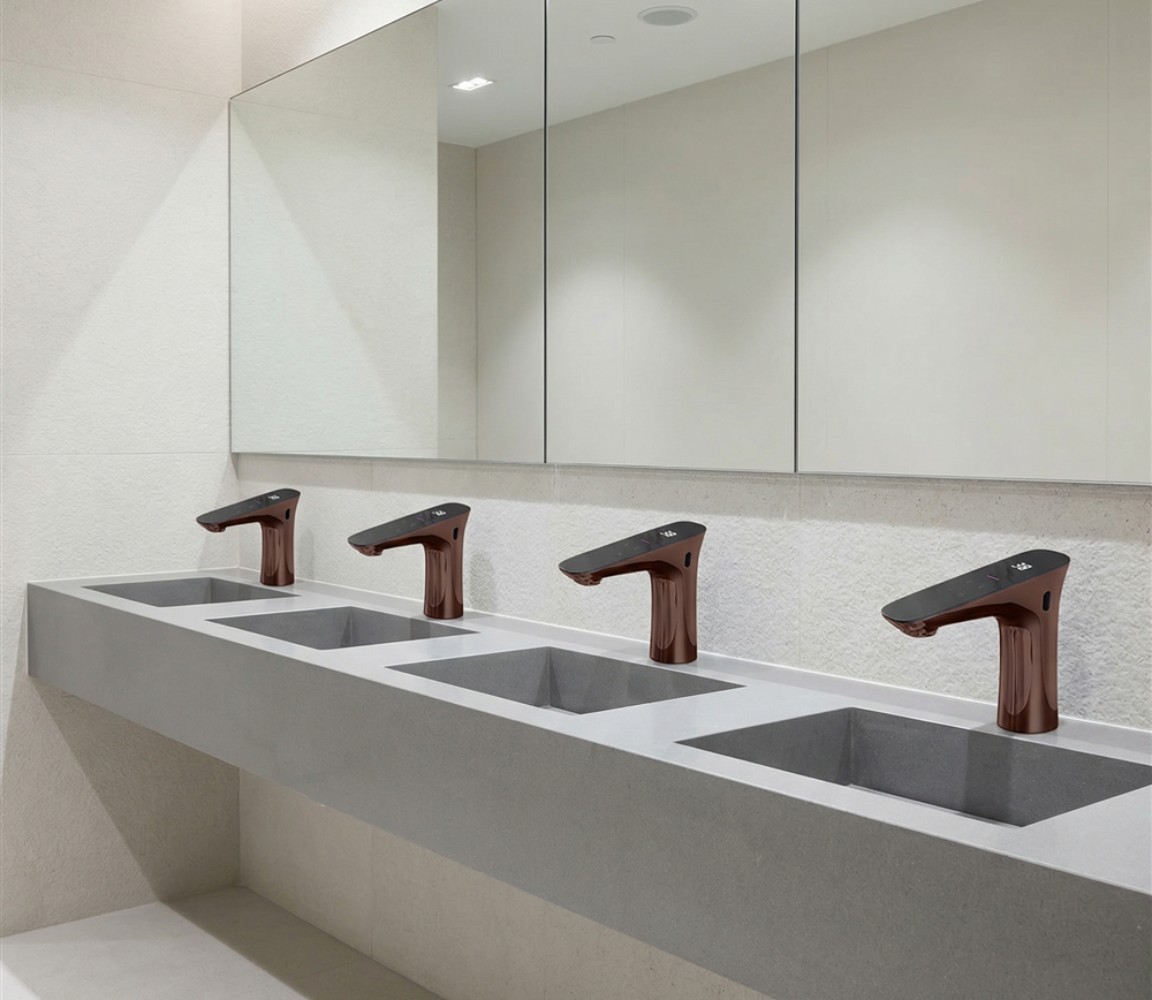
Water-Saving Faucet Technologies
Modern aviation facilities can combine multiple faucet technologies to reduce consumption and improve reliability. The best solution is usually not one feature, but a system: low-flow delivery, touchless activation, automatic shutoff, durable materials, easy maintenance, and data-supported operations.
Low-Flow Aerators
Reduce gallons per minute while shaping the stream for comfortable handwashing. Aerators are inexpensive but must be cleaned to avoid weak flow complaints.
Touchless Activation
Runs water only when hands are detected, reducing handle contact and limiting accidental run time.
Automatic Shutoff
Stops water after a programmed time, helping prevent continuous flow caused by misuse, sensor issues, or user distraction.
Metered Flow
Limits each activation cycle to a controlled duration, useful in high-traffic public restrooms.
Leak Alerts
Connected systems can help identify abnormal water use, stuck valves, or continuous-flow events faster.
Smart Maintenance
Inspection logs, aerator cleaning, battery checks, and sensor calibration protect efficiency over the fixture lifecycle.
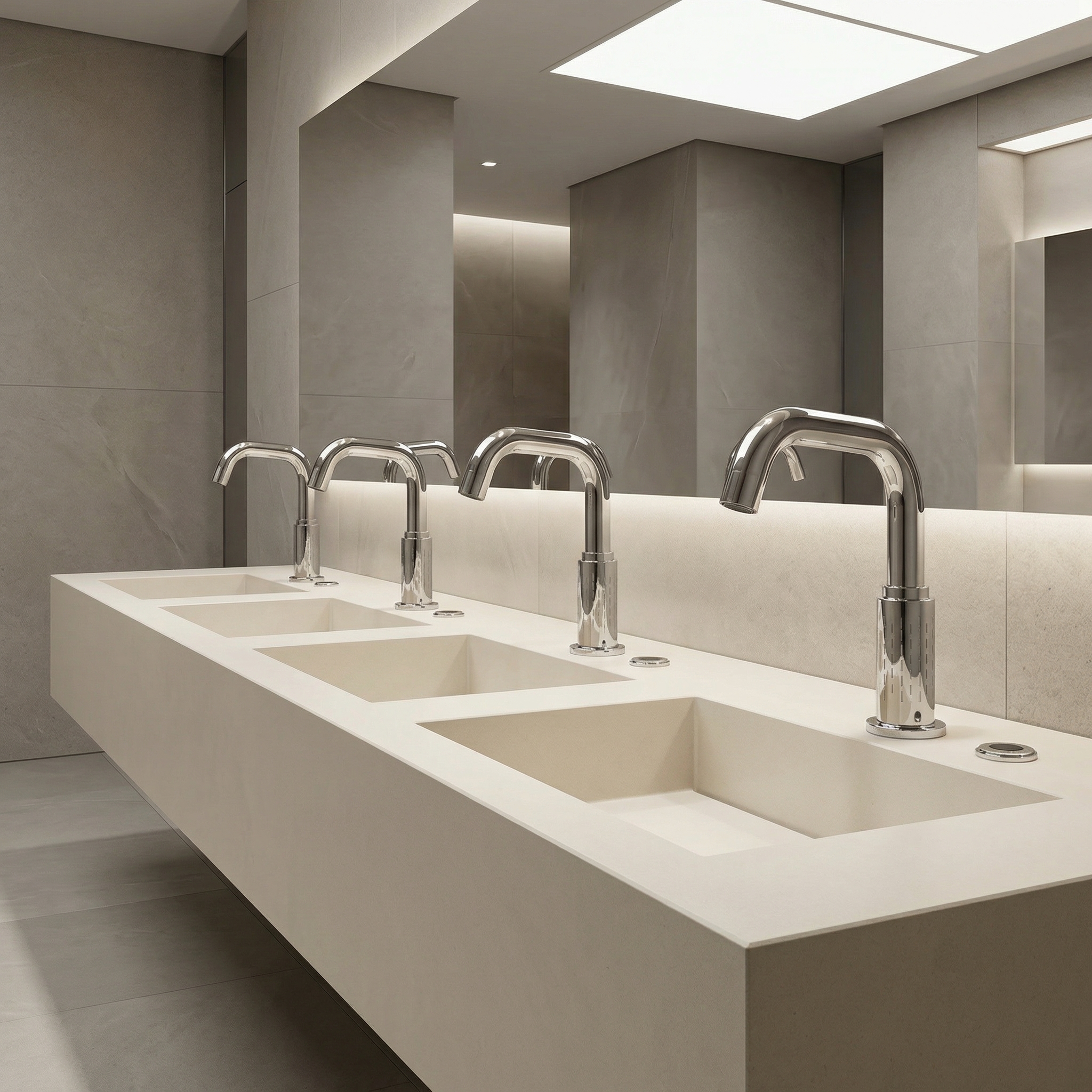
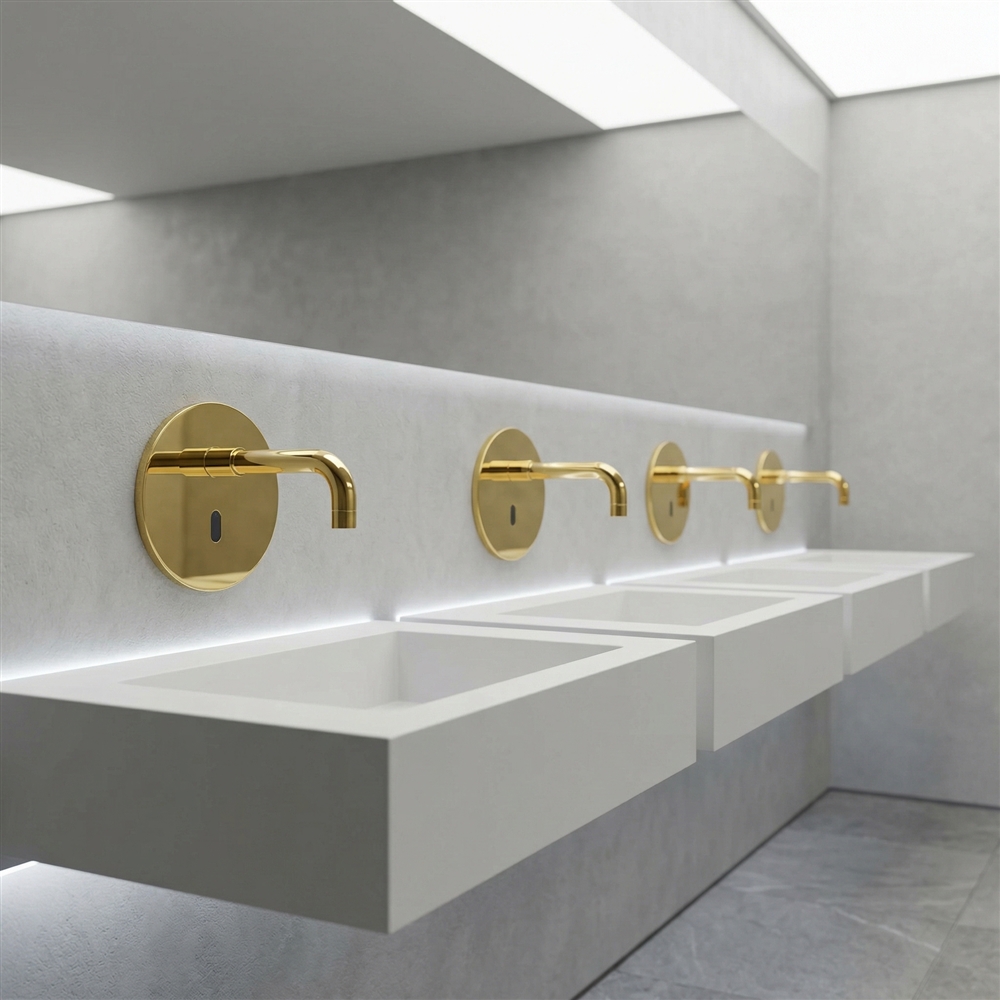
Technology Comparison Table
Each water-saving faucet technology solves a different problem. Airport teams should evaluate them by water impact, passenger experience, maintenance burden, and installation complexity.
| Technology | Water-Saving Role | Best Use in Aviation Facilities | Maintenance Note |
|---|---|---|---|
| Low-flow aerator | Reduces flow rate during each use | All public and staff restrooms | Clean regularly to prevent clogging |
| Touchless faucet | Limits water to active handwashing moments | High-traffic passenger restrooms | Check sensor lens, batteries, and range |
| Metered faucet | Controls each activation cycle | Public concourse restrooms and staff facilities | Verify run-time setting after service |
| Automatic shutoff | Prevents continuous running | Any restroom exposed to heavy public use | Test shutoff timing during inspections |
| Thermostatic mixing valve | Improves comfort and safety while avoiding waste from temperature adjustment | Premium lounges, public restrooms, family rooms | Inspect and service per manufacturer guidance |
| Leak detection / analytics | Identifies abnormal water use patterns | Large terminals with many restroom banks | Requires monitoring workflow and response plan |
| Standardized fixture family | Reduces repair delays and efficiency drift | Multi-terminal airports and FBO networks | Keep common parts and replacement aerators stocked |
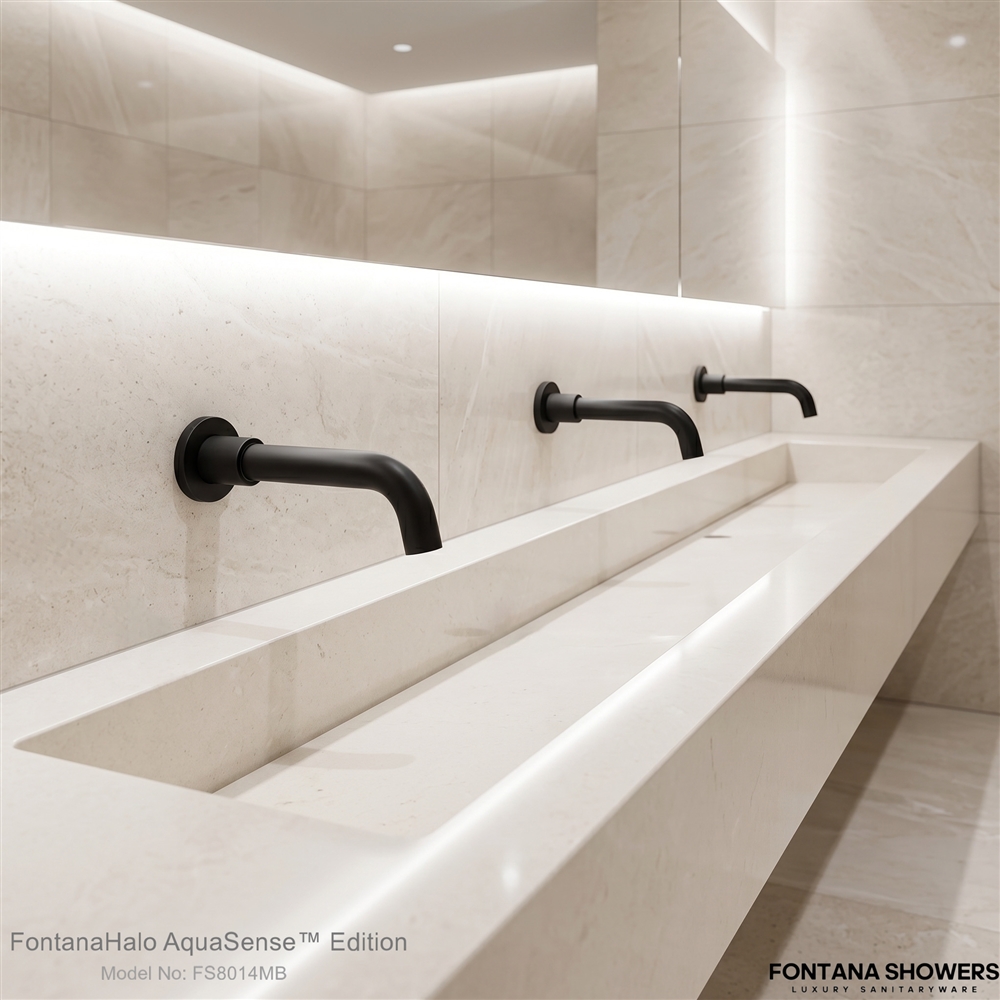
Estimated Savings Model
The model below is a planning example for a busy aviation restroom bank. Actual savings depend on fixture count, passenger volume, current flow rates, run time, water pressure, sensor calibration, and maintenance quality.
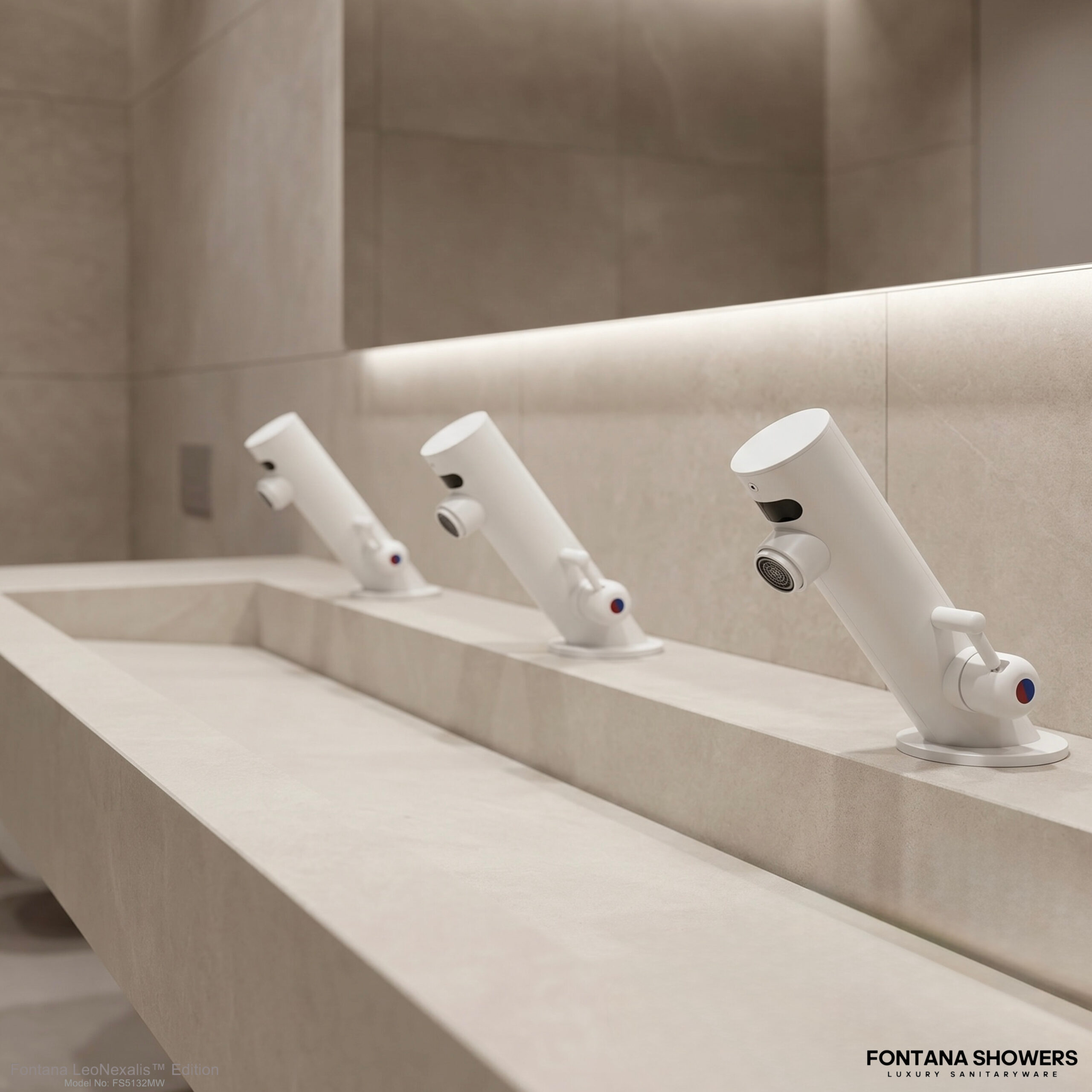
Replacing older high-flow aerators with low-flow models reduces water used per second of handwashing.
Touchless activation and metered shutoff reduce water left running between users.
Leak monitoring helps facility teams catch continuous-flow events before they become major losses.
Cleaning aerators and sensors protects the savings expected from the original specification.
Case Model: Terminal Faucet Retrofit
Consider a medium-size airport terminal with several high-use restroom banks. The airport wants to reduce water use without lowering passenger comfort or creating difficult maintenance conditions.
Manual faucets, older aerators, inconsistent shutoff, and limited maintenance data.
Install low-flow aerators, touchless faucets, automatic shutoff, hardwired power with battery backup, and serviceable filters.
Add monthly aerator cleaning, sensor checks, battery/power review, and water-use trend tracking.
Lower water waste, fewer continuous-flow events, cleaner sink decks, better passenger hygiene perception, and stronger sustainability reporting.
Maintenance Protects Savings
Water-saving technologies only remain effective when maintained. A clogged aerator can frustrate passengers and cause longer run times. A misaligned sensor can trigger unexpectedly. A failing solenoid can cause dripping or continuous flow. Sustainability teams and facility teams must work together so efficiency targets survive real-world airport operations.
| Maintenance Task | Water-Saving Purpose | Recommended Check |
|---|---|---|
| Clean aerators | Maintains expected flow and stream quality | Monthly or more often in hard-water areas |
| Clean sensor lenses | Prevents false activation and missed activation | Weekly in high-traffic restrooms |
| Test automatic shutoff | Confirms water stops after the intended cycle | Monthly |
| Inspect leaks and drips | Prevents hidden water waste | Daily visual check plus monthly technical review |
| Review usage data | Finds abnormal consumption and restroom hot spots | Monthly or quarterly |
| Replace worn parts | Keeps faucets operating within design efficiency | Based on O&M manual and service history |
FAQs
What faucet technology saves the most water in airports?
The strongest results usually come from combining low-flow aerators, touchless activation, automatic shutoff, and regular maintenance. Smart monitoring can add value in large terminals.
Are low-flow faucets comfortable for passengers?
Yes, when properly specified. A good low-flow aerator shapes the stream so passengers still experience usable handwashing performance.
Do touchless faucets always save water?
They can, but savings depend on sensor calibration, shutoff timing, maintenance, water pressure, and whether previous fixtures were manual, metered, or left running.
What is WaterSense?
WaterSense is an EPA voluntary program that helps identify water-efficient products that meet performance and efficiency criteria through independent certification.
Should airports choose battery or hardwired sensor faucets?
Hardwired faucets with battery backup are often preferred in high-traffic terminals because they reduce battery maintenance. Battery-powered systems can still work well in smaller facilities with scheduled replacement.
How do faucet retrofits support ESG goals?
They reduce resource consumption, support measurable sustainability reporting, improve passenger perception, and help facility teams document water-saving initiatives.
What is the biggest mistake in water-saving faucet projects?
Choosing efficient fixtures without a maintenance plan. Aerators, sensors, solenoids, and shutoff timing must be checked regularly to preserve savings.
Can private aviation terminals benefit from water-saving faucets?
Yes. FBOs and private terminals benefit from lower waste, premium touchless experience, cleaner sink decks, and stronger sustainability positioning.
Conclusion
Water-saving faucet technologies are a practical and visible way for aviation facilities to advance sustainability in 2026. Low-flow aerators, touchless activation, automatic shutoff, metered controls, leak detection, and smart maintenance all help reduce unnecessary water use while supporting hygiene and passenger experience.
For airports, FBOs, airline lounges, and terminal designers, the best strategy is to treat faucets as part of a broader water-management system. When fixture selection, sensor calibration, water data, maintenance routines, and sustainability reporting work together, aviation restrooms become more efficient, resilient, and passenger-friendly.
Reference Sources
Use these authority sources for further review. Each link opens in a new tab.
“`