
Aviation Facility Upgrades in 2026: The Growing Demand for Smart Restroom Fixtures
Airports, FBOs, airline lounges, private terminals, and aviation support buildings are upgrading restroom infrastructure in 2026 because passenger expectations, labor pressure, hygiene standards, sustainability goals, and facility data needs have changed. Smart restroom fixtures — including touchless faucets, automatic soap dispensers, connected flush valves, occupancy sensors, leak alerts, and usage analytics — are becoming a practical upgrade path for aviation facilities that need cleaner, more efficient, and more measurable operations.
In This Guide
Why demand is growing 2026 upgrade data Smart fixture categories Comparison table Upgrade case model Implementation roadmap FAQs Reference sources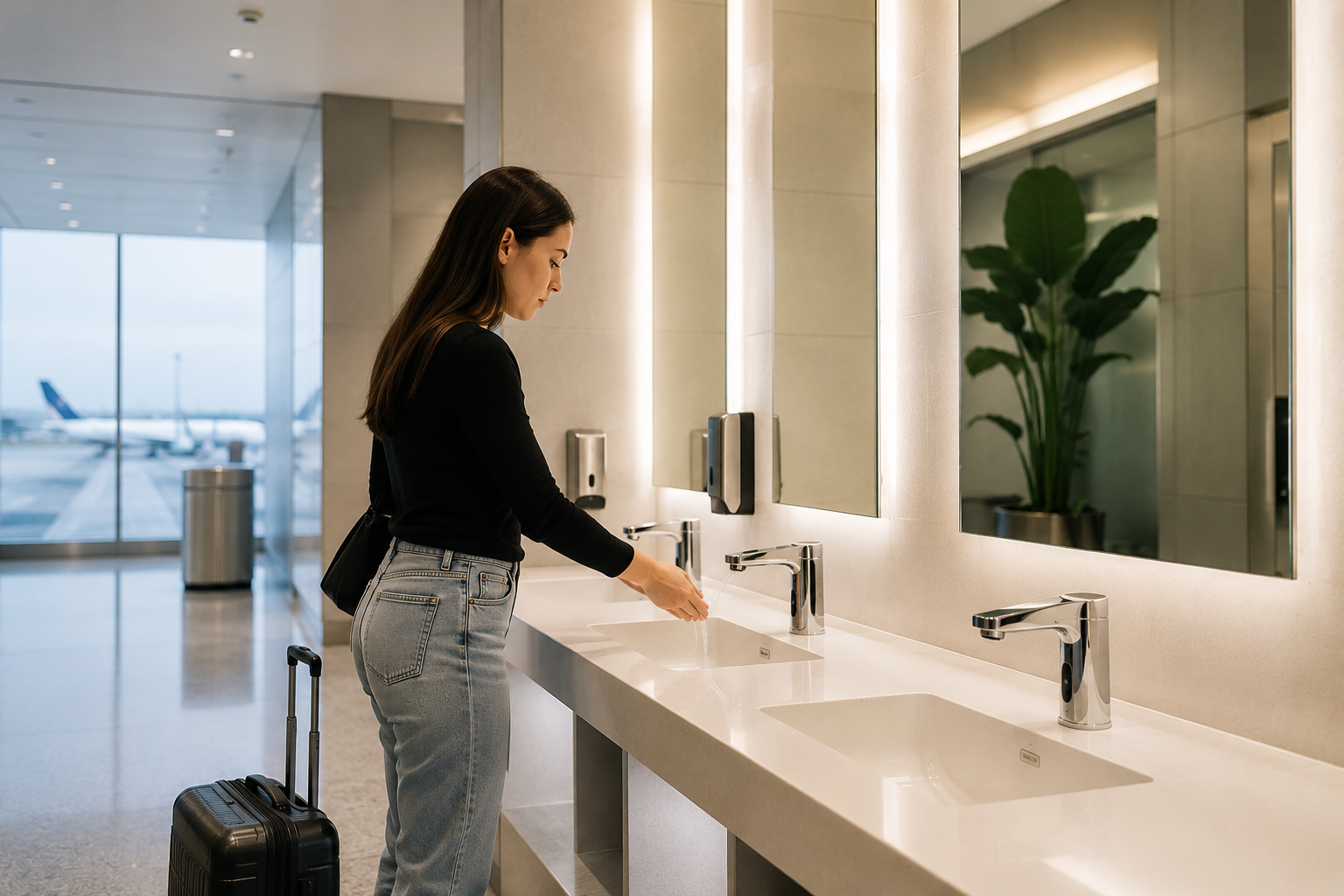
Why Demand Is Growing
Aviation facilities are under pressure to modernize without disrupting daily operations. Passenger volumes are rising, restroom expectations are higher, and airport operators increasingly need systems that can prove cleanliness, reduce manual workload, conserve resources, and improve passenger experience. Smart restroom fixtures help turn restrooms from reactive maintenance zones into measurable operational assets.
In 2026, airport modernization is increasingly focused on resilience, efficiency, technology, and passenger experience rather than purely decorative expansion. Smart restroom fixtures fit this trend because they improve the everyday spaces passengers actually use during the journey.
Hygiene Expectations
Passengers increasingly expect touchless restroom experiences in public travel environments.
Labor Efficiency
Smart restrooms help teams clean based on real usage instead of fixed schedules alone.
Water Savings
Automatic shutoff, metering, and leak alerts help reduce unnecessary water consumption.
Passenger Trust
Clean, modern, and reliable restrooms reinforce confidence in the whole aviation facility.

2026 Upgrade Data
Airport industry reporting points to a clear 2026 direction: more data-driven operations, more passenger-centered design, and stronger use of automation. ACI World’s 2026 traveller trend reporting highlights growing demand for more personalized and human-centered airport experiences. Airport smart restroom research also emphasizes IoT sensors, real-time data, and predictive analytics as tools for improving cleaning schedules, reducing operational strain, and supporting satisfaction.

Smart Fixture Categories
Smart restroom fixtures are most effective when specified as a system. A single touchless faucet can improve hygiene, but the full value appears when faucets, soap dispensers, flush systems, occupancy sensors, cleaning alerts, and analytics work together.
Touchless Faucets
Reduce shared contact points, control water use, and improve passenger confidence in high-traffic restrooms.
Automatic Soap
Supports consistent handwashing and helps teams track refill demand in busy restroom banks.
Smart Flush Valves
Improve hygiene, reduce manual contact, and support water management when correctly calibrated.
Occupancy Sensors
Show restroom demand patterns and help adjust cleaning schedules to real passenger traffic.
Leak Alerts
Identify continuous-flow events, stuck valves, and abnormal usage before they become costly failures.
Feedback Panels
Let passengers report cleanliness, supply, or fixture issues instantly so teams can respond faster.

Traditional vs. Smart Restrooms
The comparison below shows why airports and aviation facilities are upgrading from traditional restroom operations to connected, sensor-supported systems.
| Category | Traditional Restroom Fixtures | Smart Restroom Fixtures |
|---|---|---|
| Faucets | Manual or basic automatic operation | Touchless activation, timed shutoff, sensor range control, optional monitoring |
| Cleaning Schedule | Fixed interval or complaint-based | Usage-triggered cleaning based on occupancy and feedback data |
| Water Control | Limited visibility into waste and leaks | Automatic shutoff, low-flow delivery, abnormal-use alerts |
| Maintenance | Reactive service after failures | Preventive maintenance with fixture alerts and inspection logs |
| Passenger Feedback | Delayed complaints or manual reporting | Instant feedback buttons or digital reporting |
| Facility Data | Limited measurement | Dashboards for cleaning, traffic, water, and fixture status |
| Passenger Perception | Dependent on visible cleanliness at one moment | Reinforced by modern, touchless, responsive experience |
Upgrade Priority Matrix
Not every aviation facility needs the same smart restroom package. A private FBO, a crew facility, a regional airport, and an international terminal may all require different levels of automation.
Prioritize touchless faucets, automatic soap, occupancy sensors, feedback buttons, leak alerts, and dashboard reporting.
Prioritize premium touchless fixtures, quiet operation, luxury finishes, water control, and discreet maintenance access.
Prioritize reliable touchless faucets, low-flow aerators, simple maintenance logs, and standardized spare parts.
Prioritize durability, easy cleaning, consistent soap supply, and low-maintenance sensor systems.
Prioritize premium finishes, quiet automatic fixtures, passenger comfort, and high-cleanliness presentation.
Prioritize rugged materials, vandal resistance, service access, and practical water-saving controls.

Case Model: Concourse Upgrade
Consider a busy airport concourse with six public restroom banks. Passenger complaints are mostly about cleanliness during peak hours, empty soap, wet sink counters, and occasional out-of-service fixtures. The airport wants a phased upgrade without closing multiple restrooms at once.
Review fixture age, service calls, restroom traffic, water-use patterns, cleaning logs, and passenger feedback.
Install touchless faucets, automatic soap, low-flow aerators, sensor flush valves, and feedback panels in one restroom bank.
Compare complaints, cleaning response time, soap refill frequency, water use, and fixture downtime before and after the pilot.
Standardize fixture models, train maintenance teams, stock spare parts, and expand the upgrade to the remaining restroom banks.
Use dashboards and inspections to adjust cleaning schedules, monitor water events, and improve passenger experience over time.
Implementation Roadmap
Smart restroom upgrades should be planned like other airport infrastructure projects: define the problem, measure the baseline, choose the right technology, protect passenger access during installation, and verify results after deployment.
| Step | Action | Deliverable |
|---|---|---|
| 1. Facility Audit | Assess current fixtures, service history, cleaning workload, and passenger complaints | Restroom upgrade priority list |
| 2. Technology Scope | Choose faucets, soap, flush, occupancy, leak, feedback, and dashboard requirements | Smart restroom specification package |
| 3. Pilot Install | Upgrade one or two restroom banks first | Measured pilot results |
| 4. Staff Training | Train cleaning and maintenance teams on sensors, batteries, aerators, and alerts | Maintenance playbook |
| 5. Data Workflow | Assign who receives alerts and how issues are closed | Response process and dashboard ownership |
| 6. Rollout | Expand to more facilities with standardized models and parts | Scaled smart restroom program |
| 7. Review | Track downtime, water use, complaints, cleaning response, and replacement costs | Continuous improvement report |

FAQs
What are smart restroom fixtures?
Smart restroom fixtures include touchless faucets, automatic soap dispensers, sensor flush valves, occupancy sensors, leak alerts, feedback panels, and connected systems that help monitor restroom performance.
Why are aviation facilities upgrading restroom fixtures in 2026?
Demand is driven by passenger hygiene expectations, labor efficiency, water savings, predictive maintenance, sustainability reporting, and the need for better facility data.
Do smart restroom fixtures reduce maintenance work?
They can reduce emergency maintenance by identifying problems earlier, but they still require preventive care such as sensor cleaning, battery checks, aerator cleaning, and parts replacement.
Are touchless faucets enough to make a restroom smart?
No. Touchless faucets are a strong first step, but a smart restroom system may also include soap monitoring, occupancy data, leak alerts, feedback buttons, and maintenance dashboards.
Can small FBOs benefit from smart restroom fixtures?
Yes. Smaller aviation facilities may not need complex dashboards, but they can benefit from reliable touchless faucets, low-flow aerators, automatic soap, and standardized maintenance routines.
What is the biggest mistake in smart restroom upgrades?
The biggest mistake is installing technology without assigning responsibility for alerts, maintenance, training, spare parts, and performance measurement.
How do smart fixtures support sustainability?
They reduce unnecessary water use through automatic shutoff, low-flow delivery, leak detection, metering, and usage data that supports sustainability reporting.
What should airports measure after an upgrade?
Measure fixture downtime, water use, complaints, cleaning response times, soap refill frequency, out-of-service events, passenger feedback, and maintenance costs.
Conclusion
The growing demand for smart restroom fixtures in aviation facilities reflects a broader shift in airport infrastructure: operations are becoming more data-driven, passenger experience is becoming more human-centered, and sustainability is becoming measurable. Smart restroom fixtures help airports, FBOs, lounges, and private terminals upgrade the spaces passengers notice every day.
In 2026, the best restroom upgrades combine touchless technology, water-saving performance, predictive maintenance, passenger feedback, and facility analytics. When implemented with the right roadmap, smart fixtures can reduce operational strain, improve hygiene confidence, and make aviation facilities feel more modern, responsive, and reliable.
Reference Sources
Use these authority sources for further review. Each link opens in a new tab.
“`

Adam Roth is a seasoned commercial plumbing consultant and building systems specialist with over a decade of experience supporting architects, engineers, and contractors in the specification and implementation of high-performance bathroom fixture solutions. His expertise spans touchless faucet systems, ADA-compliant restroom design, water conservation technologies, and durable commercial-grade fixtures for hospitality, healthcare, educational, and industrial facilities. Adam frequently collaborates with facility managers and project developers to identify efficient, code-compliant solutions that balance functionality, hygiene, and long-term operational value. Through his industry insights and practical field experience, he contributes valuable perspectives on modern restroom innovations, sustainable plumbing practices, and evolving commercial bathroom standards within the AEC industry.