
Why Smart Faucets Are a Critical Part of Modern Airport Infrastructure
Modern airport infrastructure is no longer limited to gates, runways, baggage systems, and security checkpoints. Passenger-facing restrooms now play a measurable role in hygiene confidence, water efficiency, accessibility, maintenance response, and airport brand trust. Smart touchless faucets are a critical fixture category because they turn a basic handwashing point into a controlled, low-contact, data-ready infrastructure asset.
In This Guide
Why smart faucets are critical Infrastructure data points Smart faucet systems Value by airport area Terminal restroom case model Specification checklist FAQs Reference sources
Why Smart Faucets Are Critical
Airport restrooms operate at a scale few commercial buildings experience. Passenger flows rise and fall around boarding waves, international arrivals, delays, and security checkpoints. In this environment, a faucet must do more than deliver water. It must activate predictably, shut off reliably, limit waste, tolerate frequent cleaning, and remain easy to service.
Smart faucets support modern airport infrastructure because they bring automation to a high-frequency passenger touchpoint. The best systems reduce physical contact, standardize water delivery, support accessibility, and help facility teams build more consistent restroom operations.
Hygiene
Hands-free activation removes faucet handles from the passenger contact sequence.
Water Control
Automatic shutoff reduces unnecessary run time and supports sustainability goals.
Reliability
Commercial-grade sensor logic helps faucets respond consistently during heavy use.
Passenger Trust
Modern touchless sink zones communicate care, cleanliness, and airport professionalism.
Infrastructure Data Points
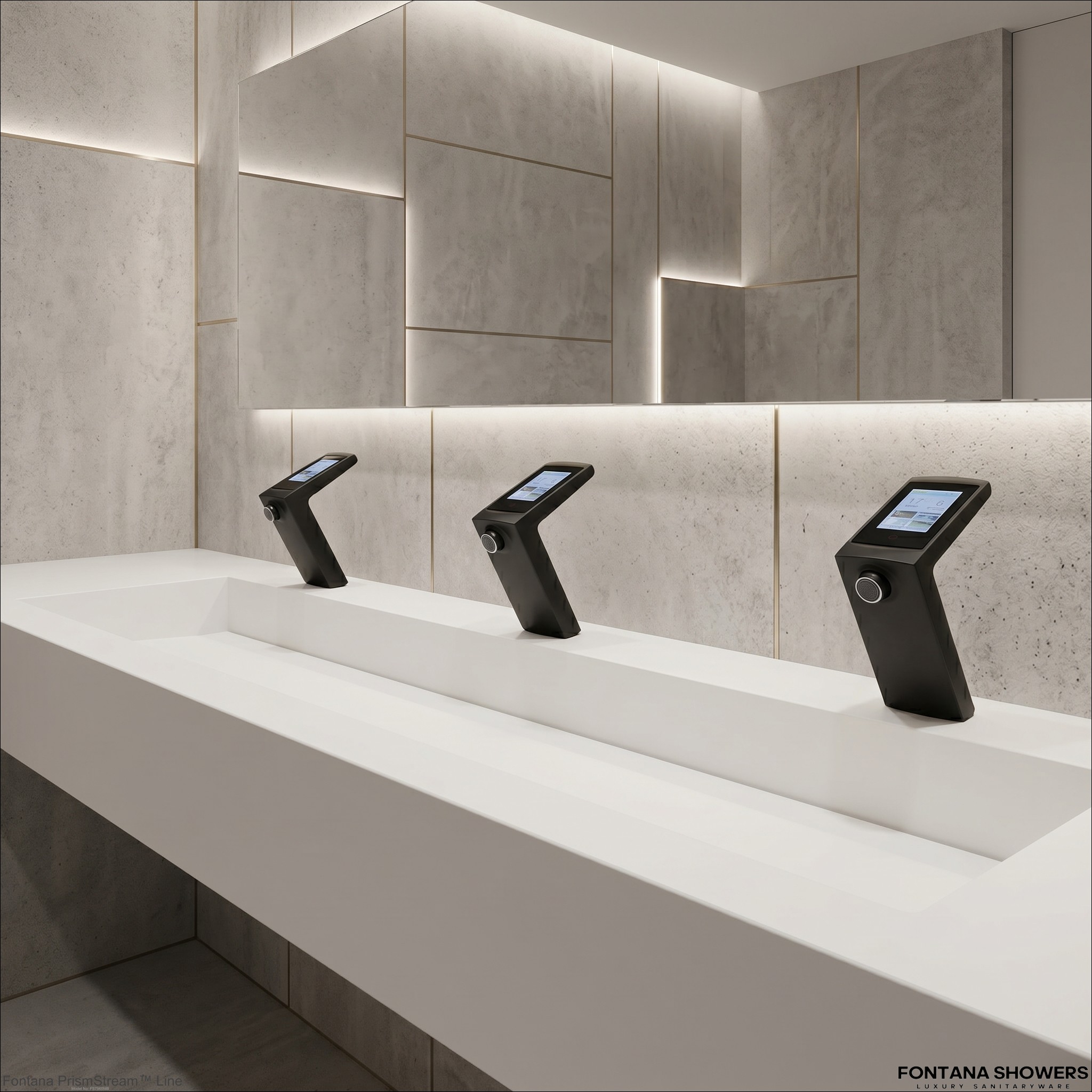
Smart faucet planning should be evaluated with practical airport metrics: fixture uptime, water-use trends, false activations, missed activations, cleaning frequency, service-call volume, accessibility performance, and passenger feedback. EPA WaterSense reports that WaterSense-labeled bathroom sink faucets and accessories use a maximum of 1.5 gallons per minute and can reduce sink flow by 30% or more from the standard 2.2 gallons per minute without sacrificing performance.
For airport restrooms, this efficiency becomes more important because the same sink bank may serve thousands of uses over a short peak window. Smart faucets add another layer by limiting unnecessary runtime through automatic shutoff and sensor-based activation.

What Makes a Faucet Smart?
A smart airport faucet combines hands-free operation with controlled delivery and serviceable infrastructure. Depending on the project, the faucet may include infrared sensing, adjustable detection zones, automatic shutoff, low-flow aerators, AC/DC power, battery backup, serviceable solenoids, and optional integration with connected restroom monitoring.
| Smart Faucet Feature | Infrastructure Function | Airport Benefit |
|---|---|---|
| Infrared sensor activation | Detects hands and starts water automatically | Reduces handle contact and improves hygiene flow |
| Automatic shutoff | Stops water after use or after programmed timeout | Controls waste and reduces overflow exposure |
| Low-flow aerator | Controls flow rate while shaping the stream | Supports sustainability without sacrificing usability |
| Adjustable sensor range | Tunes activation zone to sink geometry and user needs | Reduces false triggers and missed activations |
| AC/DC power options | Supports hardwired operation with battery backup | Improves uptime in high-traffic restroom banks |
| Serviceable filters and solenoids | Allows repair without replacing the entire fixture | Reduces downtime and maintenance cost |
| Connected monitoring option | Supports usage alerts or service tracking where available | Helps facility teams manage restroom performance at scale |
Value by Airport Area
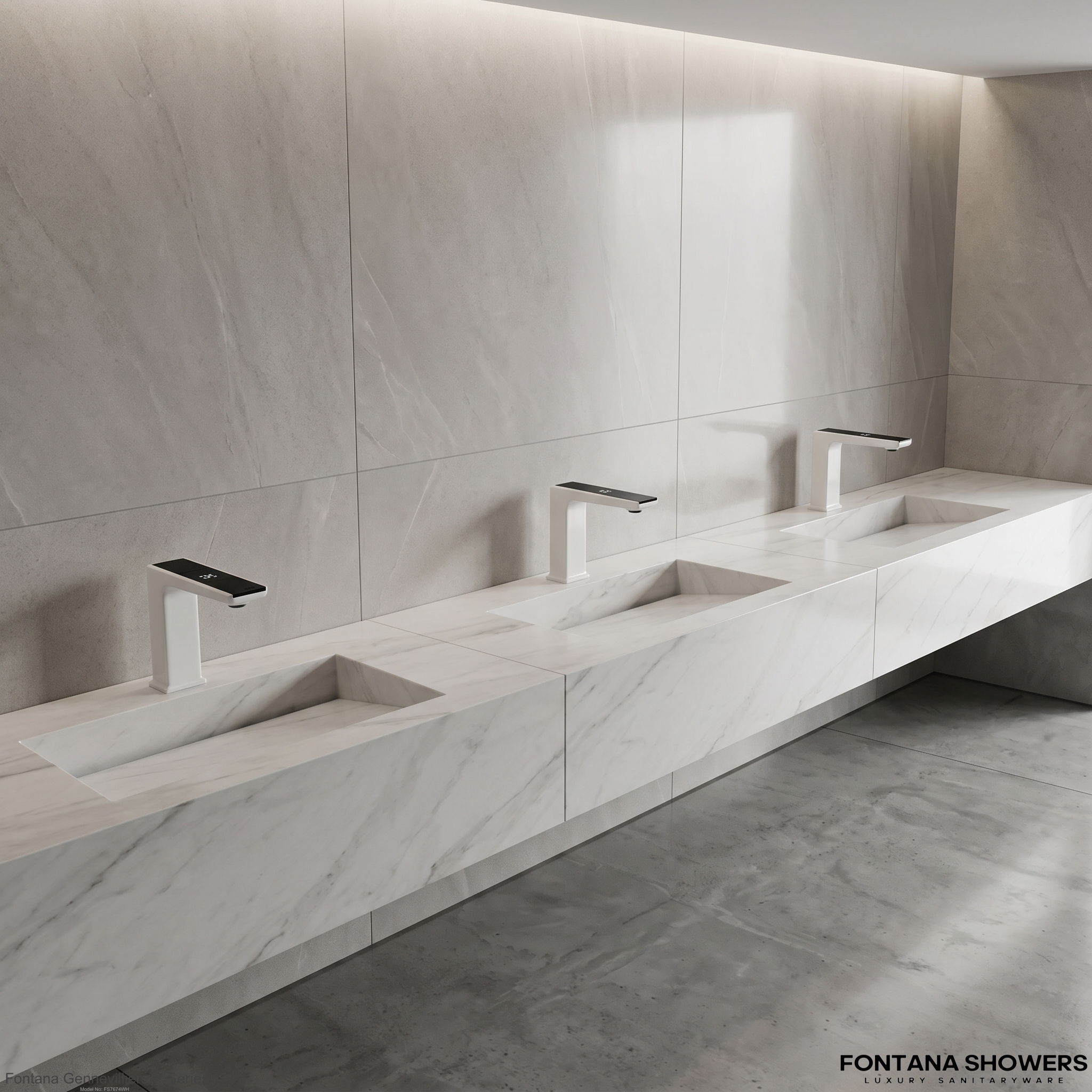
Smart faucets create different value depending on the airport location. Public terminals need speed and hygiene. Lounges need premium experience. Family restrooms need accessibility and ease of use. Maintenance areas need rugged durability. A good infrastructure plan assigns the right smart faucet configuration to the right restroom environment.
Prioritize fast activation, automatic shutoff, durable finishes, and easy service access for high passenger volume.
Use touchless faucets to support fast post-flight handwashing and strong first impressions.
Choose premium touchless fixtures that match hospitality design while maintaining commercial reliability.
Prioritize easy activation for children, caregivers, and passengers with limited dexterity.
Combine luxury finish options with sensor reliability and low-maintenance construction.
Use commercial-grade sensor faucets where hygiene and water control are still important, but select models that are easy to service.

Case Model: Smart Terminal Restroom
Consider a restroom bank near a major departure concourse. The airport wants to reduce passenger complaints, improve hygiene perception, control water use, and make maintenance more predictable. The existing faucet bank is functional but not optimized for peak passenger waves.
Manual fixtures and inconsistent shutoff create handle contact, wet counters, and unpredictable water use.
Install smart touchless faucets with automatic shutoff, low-flow aerators, hardwired power, battery backup, and serviceable filters.
Add sensor cleaning, aerator checks, power checks, spare-parts inventory, and restroom performance logs.
Track water use, service calls, restroom complaints, faucet downtime, passenger feedback, and visible sink-deck cleanliness.
Specification Checklist
Use this checklist before specifying smart faucets for airport infrastructure projects.
| Specification Area | What to Check | Why It Matters |
|---|---|---|
| Sensor performance | Detection range, false-trigger resistance, activation speed | Improves passenger experience and reduces water waste |
| Power strategy | AC, DC, hardwired, battery backup, battery life | Protects uptime in high-volume restrooms |
| Flow control | Low-flow aerator, timed shutoff, water pressure compatibility | Supports sustainability and predictable operation |
| Material quality | Commercial brass or stainless construction, durable finish | Resists cleaning chemicals and passenger wear |
| Accessibility | Reach range, sink height, clear floor space, sensor usability | Supports inclusive airport restroom design |
| Maintenance access | Aerators, strainers, filters, solenoids, batteries, mixing valves | Reduces downtime and repair complexity |
| Documentation | Cut sheets, warranty, O&M manual, parts list, BIM/Revit files | Supports design review, procurement, and long-term operations |
FAQs
Why are smart faucets important in airport infrastructure?
They support hygiene, water control, accessibility, passenger experience, and maintenance reliability in one of the airport’s most frequently used facility areas.
Are smart faucets only about touchless hygiene?
No. Touchless hygiene is a major benefit, but smart faucets also support automatic shutoff, water efficiency, serviceability, power planning, and potentially connected restroom monitoring.
Do smart faucets reduce water use?
They can reduce unnecessary runtime through automatic shutoff and controlled flow. Actual savings depend on flow rate, passenger volume, calibration, maintenance, and previous fixture type.
Where should airports install smart faucets first?
Start with high-traffic public restrooms near gates, arrivals, baggage claim, security exits, food courts, lounges, and family restrooms.
Do smart faucets require more maintenance?
They require different maintenance: sensor cleaning, aerator cleaning, battery or power checks, solenoid inspection, and spare-parts planning. With a good program, they can reduce reactive service issues.
Are smart faucets ADA-friendly?
They can be, but the entire sink area must be correctly designed. Sensor range, clear floor space, sink height, reach range, and accessory placement must all be checked.
What is the biggest specification mistake?
Selecting faucets only by appearance without reviewing sensor reliability, service access, power strategy, flow rate, warranty, and replacement-part availability.
Can FBOs and private terminals use smart faucets?
Yes. FBOs and private terminals benefit from premium touchless experience, reduced contact, water control, and better alignment with luxury aviation expectations.
Conclusion
Smart faucets are a critical part of modern airport infrastructure because they connect restroom design to hygiene, sustainability, accessibility, passenger trust, and facility operations. They are not simply upgrades to a sink; they are high-frequency infrastructure components that influence the daily airport experience.
For airports, lounges, FBOs, and aviation terminals, the best approach is to specify smart touchless faucets as part of a complete restroom system: reliable sensors, low-flow delivery, automatic shutoff, accessible layout, durable materials, documented maintenance, and performance measurement.
Reference Sources
Use these authority and product-reference sources for additional review. Each link opens in a new tab.