
How Smart Faucets Improve Hygiene in Airport Facilities
Smart faucets are becoming a core hygiene upgrade in airport facilities because they reduce shared touchpoints, support more consistent handwashing, control water use, and help facility teams keep restroom systems operating reliably. In high-traffic aviation environments, a faucet is not just a plumbing fixture — it is part of the airport’s public health, passenger confidence, and maintenance strategy.
In This Guide
Why hygiene depends on fixture design Smart faucet hygiene data Key smart faucet features Airport handwashing workflow Hygiene comparison table Airport restroom case model Specification checklist FAQs Reference sources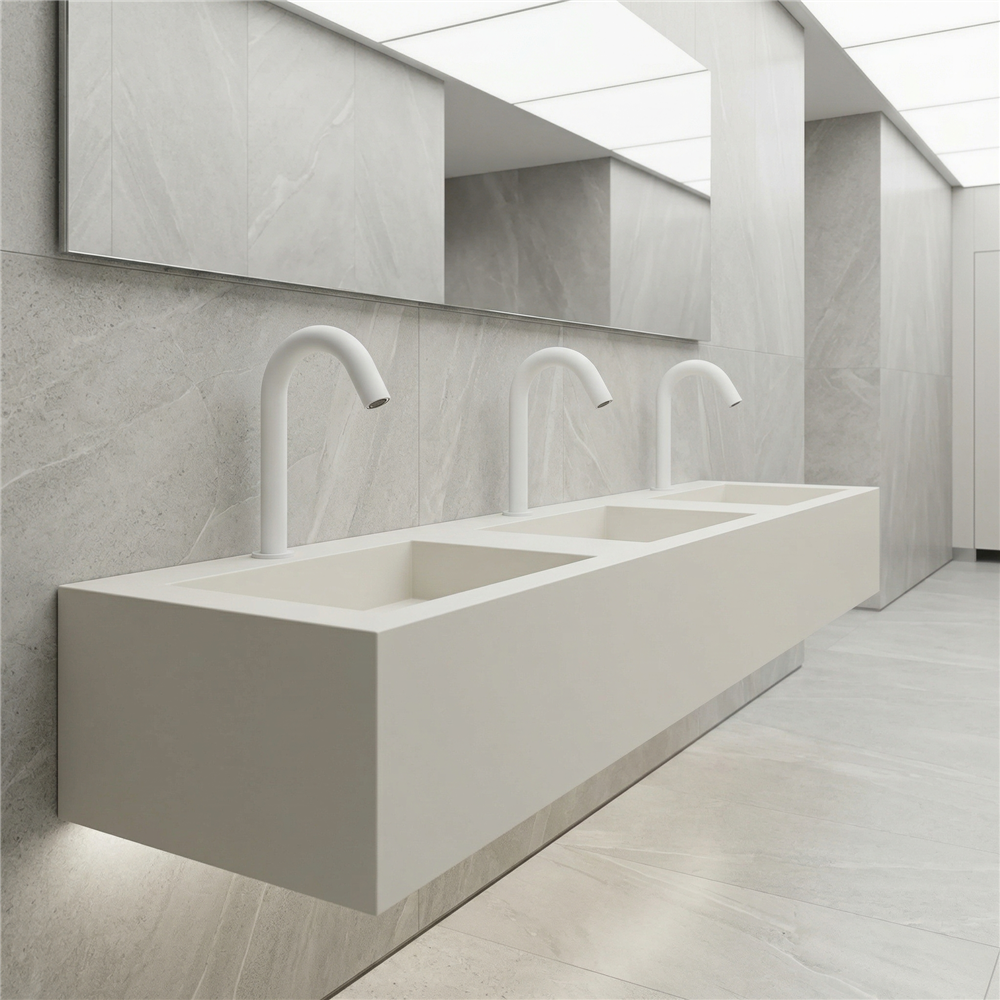
Why Fixture Design Matters
Airport restrooms are shared by passengers, airline crews, airport employees, contractors, families, international travelers, and people with different mobility needs. Because so many users pass through the same sink area, restroom hygiene depends not only on cleaning frequency but also on how the fixtures guide behavior.
A manual faucet can require touching the handle before washing and again after washing. A smart touchless faucet removes that step by using a sensor to activate water and stop flow automatically. This improves the hygiene sequence and makes handwashing easier for passengers carrying luggage, guiding children, or rushing between flights.
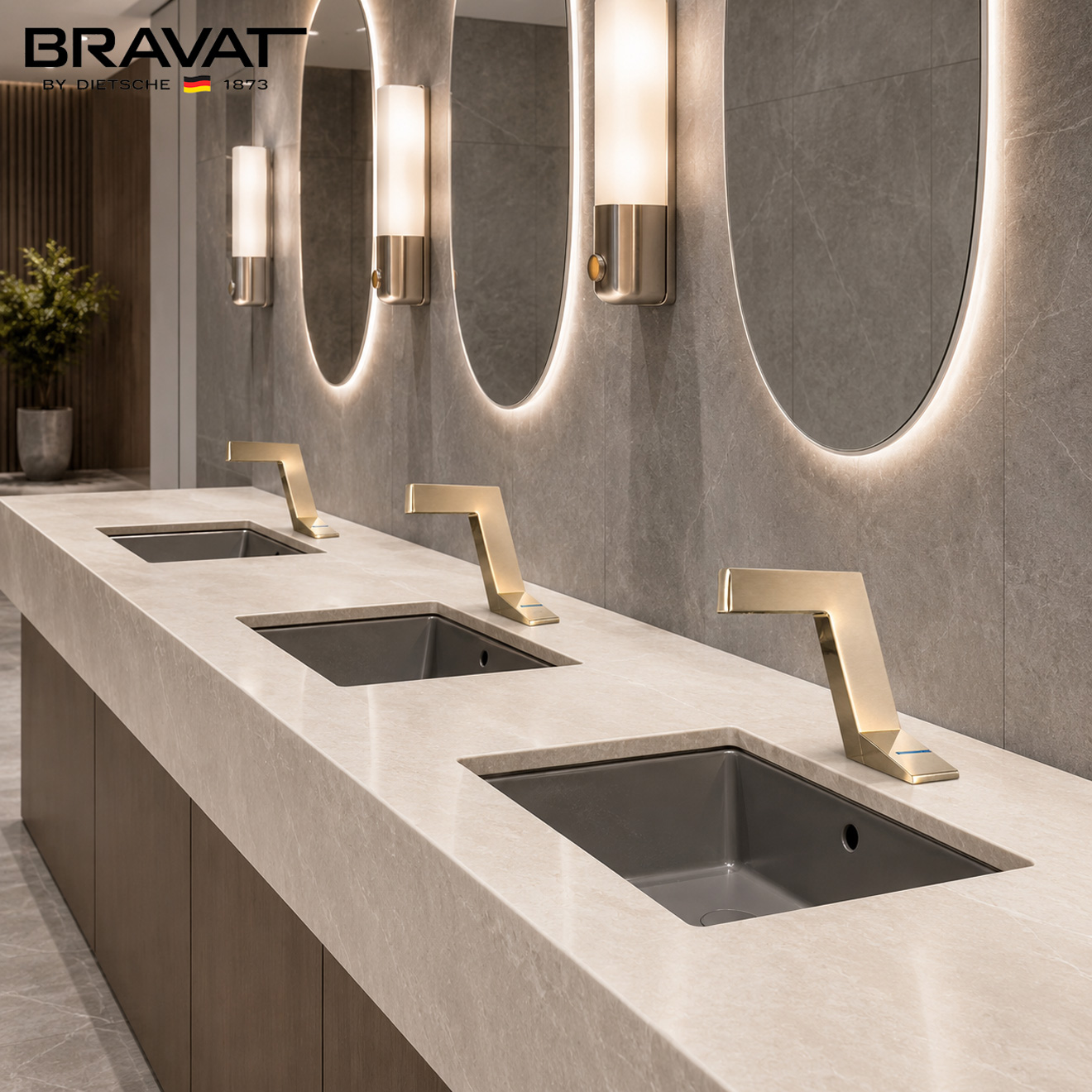
Lower Contact
Passengers can wash without touching faucet handles before or after cleaning their hands.
Cleaner Flow
Automatic shutoff reduces water left running and helps limit sink-deck splash.
Better Access
Sensor activation helps children, older travelers, and passengers with limited dexterity.
Stronger Trust
Modern touchless restrooms signal that the airport is investing in cleanliness and passenger care.
Smart Faucet Hygiene Data
Public health guidance consistently emphasizes handwashing as a basic way to reduce the spread of germs. In airport facilities, the challenge is not only reminding passengers to wash; it is making the sink experience fast, obvious, accessible, and low-contact. Smart faucets support that goal by automating the water step and removing the need to touch a shared faucet handle.
Water efficiency matters too. EPA WaterSense notes that replacing older, inefficient faucets and aerators with efficient models can save water while maintaining performance. In airports, automatic shutoff and low-flow aerators help reduce unnecessary use in high-volume restroom banks.
Key Smart Faucet Features
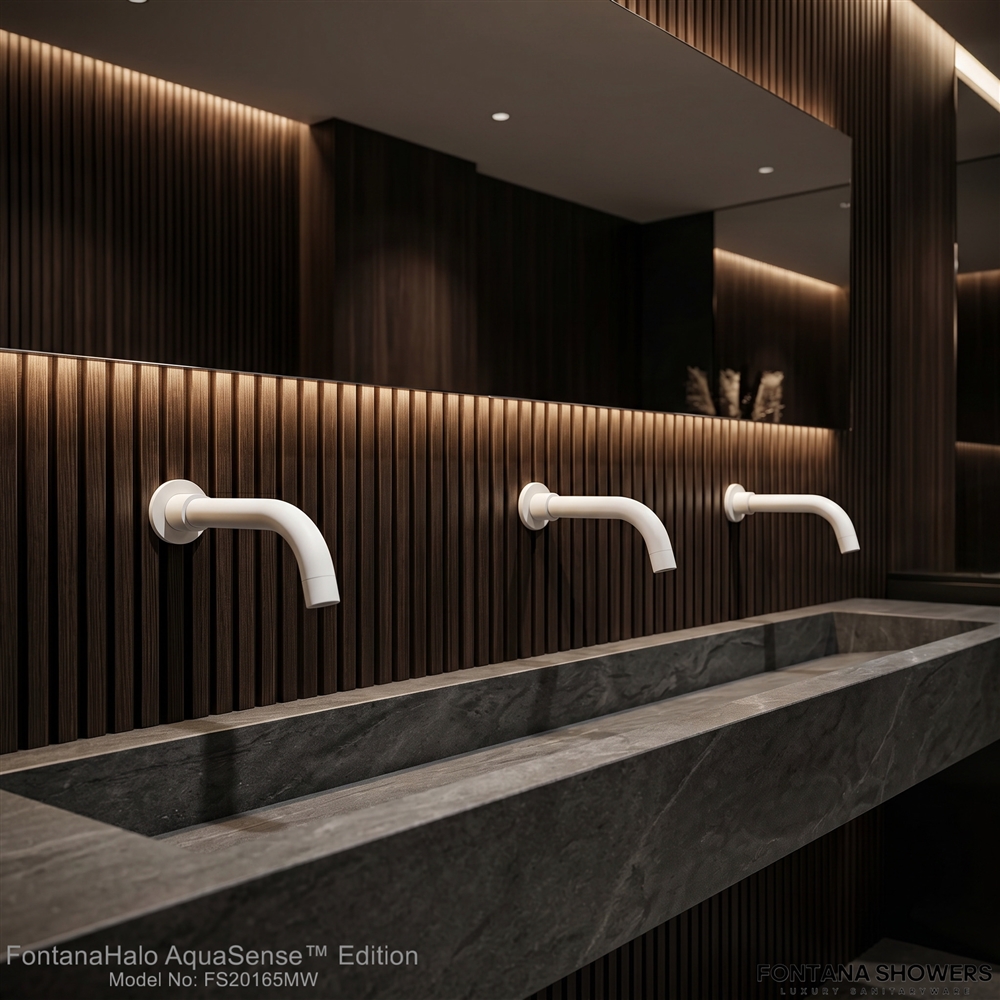
Smart airport faucets improve hygiene through a combination of sensor activation, timed shutoff, controlled flow, durable materials, and serviceable components. The best installations treat the faucet as part of a larger restroom hygiene system that includes soap, drying, drainage, cleaning, and inspection workflows.
| Smart Faucet Feature | Hygiene Benefit | Airport Operations Benefit |
|---|---|---|
| Infrared sensor activation | Reduces faucet-handle contact | Improves usability during high passenger flow |
| Automatic shutoff | Limits standing water and unnecessary run time | Reduces water waste and overflow risk |
| Low-flow aerator | Supports effective washing with controlled flow | Helps airport water-conservation goals |
| Adjustable sensor range | Improves activation for different users | Reduces false triggers and missed activations |
| Hardwired power with backup | Maintains fixture availability | Reduces downtime in high-use restrooms |
| Serviceable filters and solenoids | Keeps flow consistent | Improves preventive maintenance and repair speed |
| Durable commercial finish | Maintains visible cleanliness | Resists frequent cleaning and passenger wear |
Cleaner Handwashing Workflow
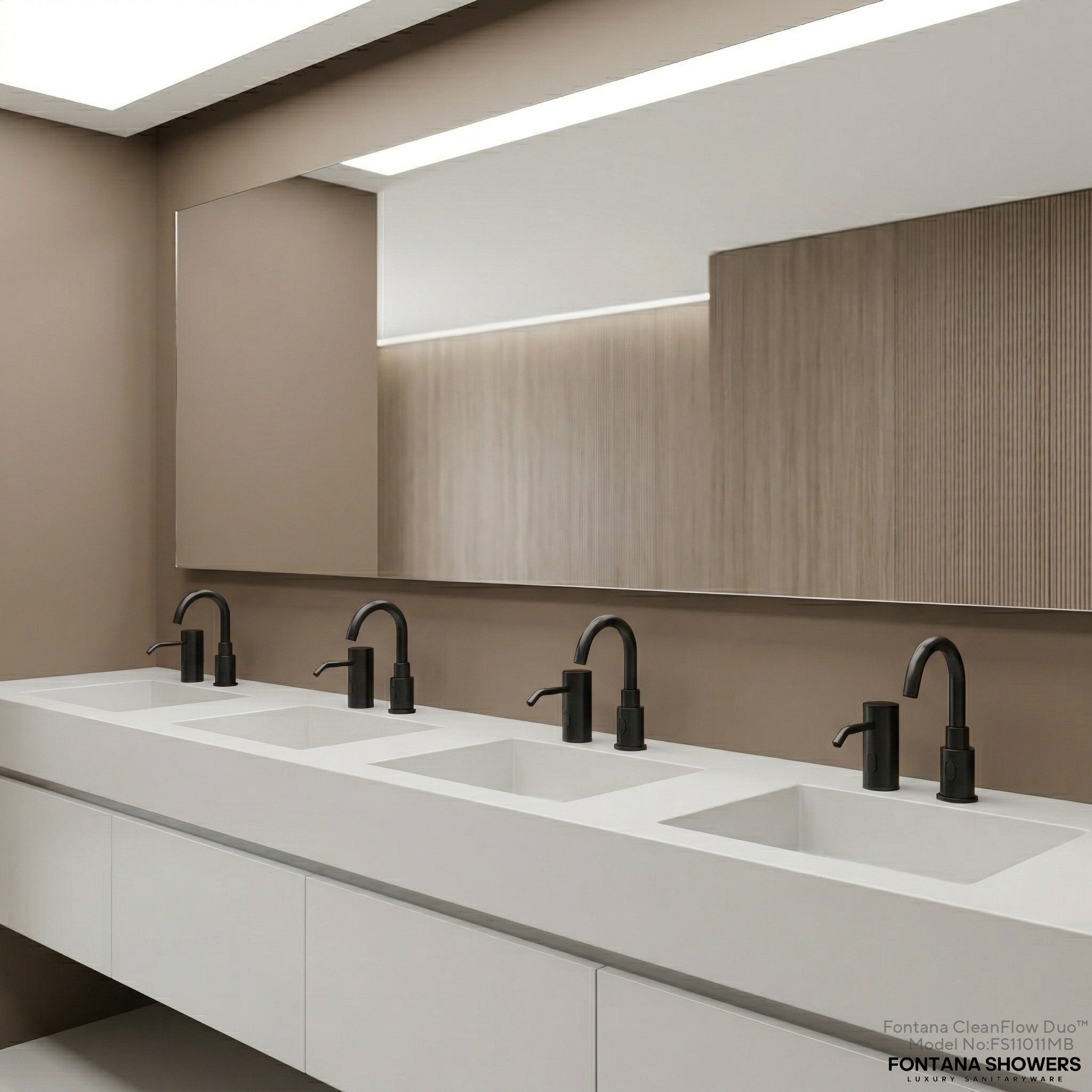
Smart faucets improve the handwashing workflow by reducing unnecessary decisions. Passengers approach the sink, place hands under the faucet, water starts automatically, and water stops when hands are removed. This is simple, fast, and more consistent than searching for handles, twisting controls, or pushing buttons.
Clear sink spacing and visible fixtures help passengers move quickly into position.
The sensor detects hands without requiring handle contact.
Controlled flow supports effective handwashing with less splash.
Automatic shutoff stops water without the passenger touching a handle.
The sink area stays cleaner when water delivery is controlled.
Facility teams can quickly identify malfunctioning fixtures, weak flow, or sensor issues.
Manual vs. Smart Hygiene Comparison
| Hygiene Factor | Manual Faucet | Smart Touchless Faucet | Airport Impact |
|---|---|---|---|
| Handle contact | Requires touching controls | No handle contact required | Touchless supports lower-contact restroom use |
| Water shutoff | Depends on passenger behavior | Automatic shutoff | Reduces running water and sink mess |
| Passenger speed | Requires identifying and operating handle | Immediate sensor activation | Improves throughput during peak traffic |
| Accessibility | Depends on handle type and force | Can support easier use when properly designed | Useful for children, elderly travelers, and users with limited dexterity |
| Maintenance | Mechanical wear and handle issues | Sensor, solenoid, power, and aerator checks | Both require preventive maintenance |
| Passenger perception | Familiar but less modern | Clean, modern, expected in upgraded terminals | Improves hygiene confidence |
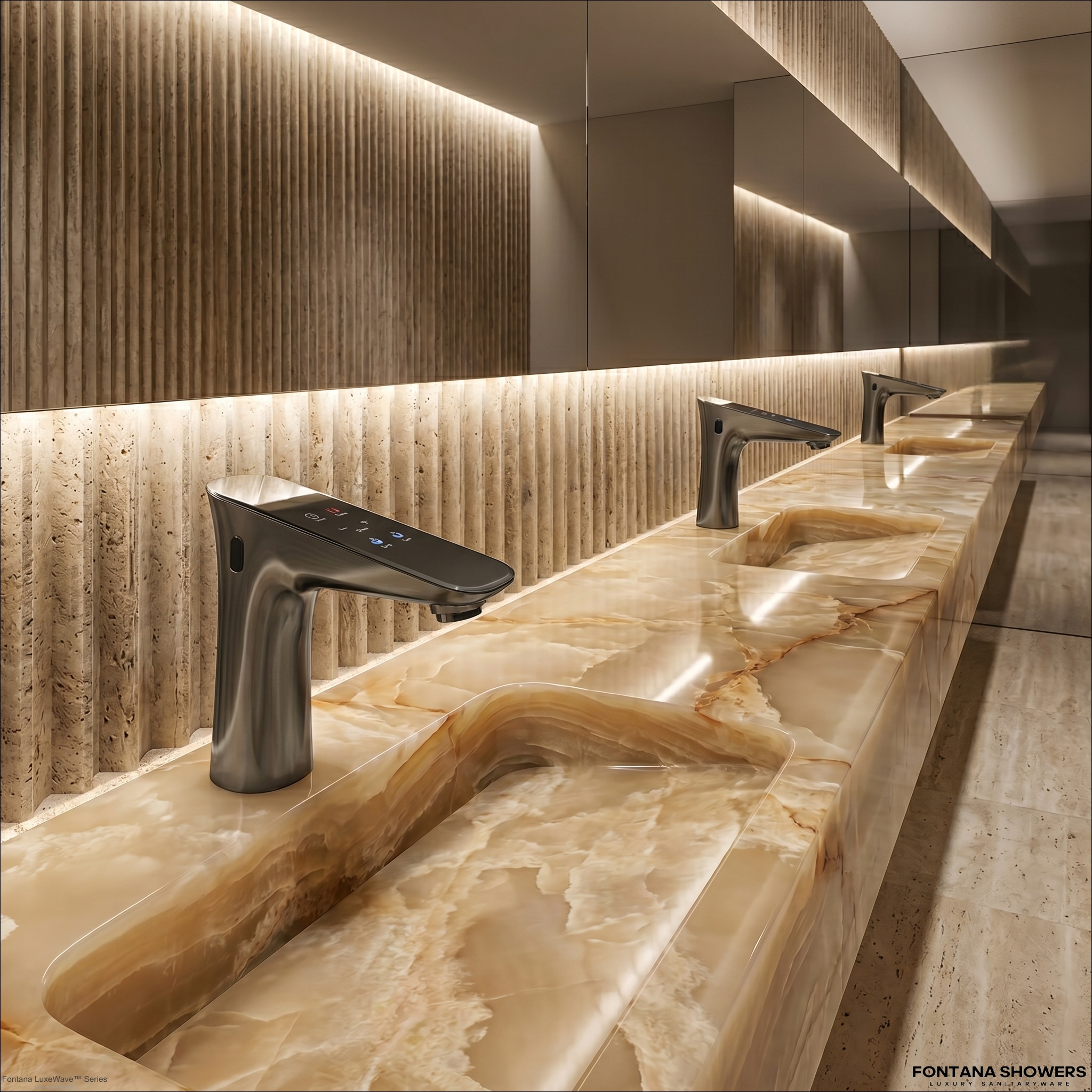
Case Model: Terminal Restroom Upgrade
Consider a busy terminal restroom near food concessions and boarding gates. The restroom experiences heavy use, sink counter splash, inconsistent handwashing behavior, and passenger complaints during peak departure windows. A smart faucet upgrade can address hygiene and operations together.
| Before Upgrade | Smart Faucet Improvement | Metric to Track |
|---|---|---|
| Manual handle contact before and after washing | Hands-free activation and shutoff | Passenger hygiene feedback |
| Water left running or inconsistent shutoff | Automatic timed shutoff | Water-use trend and overflow incidents |
| Wet sink deck during peak use | Controlled flow and better shutoff | Cleaning frequency and visible wetness checks |
| Unclear fixture failure reporting | Preventive checks for sensor, aerator, solenoid, and power | Fixture downtime and service calls |
Airport Specification Checklist
Before specifying smart faucets for airport restrooms, facility teams should confirm the following requirements.
Choose adjustable sensing range for different users, sink depths, and lighting conditions.
Use hardwired power with battery backup where high restroom uptime is required.
Specify low-flow aerators and automatic shutoff to reduce waste without reducing usability.
Ensure filters, solenoids, batteries, and mixing valves are accessible to technicians.
Use commercial-grade brass or stainless steel construction with finishes that tolerate frequent cleaning.
Verify clear floor space, reach range, sink height, knee clearance, and fixture usability.
FAQs
How do smart faucets improve hygiene in airports?
They reduce shared faucet-handle contact, automate water flow, support faster handwashing, and help keep the sink zone more controlled during heavy restroom use.
Are smart faucets the same as touchless faucets?
Touchless activation is the main smart feature. Some smart faucets may also include adjustable settings, automatic shutoff, usage data, diagnostics, or integration with restroom monitoring systems.
Do smart faucets replace restroom cleaning?
No. They support hygiene but do not replace cleaning. Airports still need reliable cleaning schedules, soap supply, drying systems, and fixture maintenance.
Can smart faucets reduce water waste?
Yes. Automatic shutoff and low-flow aerators can reduce unnecessary run time, especially in high-traffic airport restrooms.
What maintenance do smart airport faucets need?
Facility teams should clean sensor lenses, inspect aerators, check power, test shutoff timing, clean filters, and keep solenoids or replacement parts available.
Are smart faucets ADA-friendly?
They can be, but the entire lavatory area must be designed correctly. Sensor range, reach, clear floor space, sink height, and accessory placement must all be reviewed.
Where should airports install smart faucets first?
Start with high-traffic passenger restrooms near gates, arrivals, baggage claim, food courts, lounges, family restrooms, and security exit areas.
What is the biggest mistake in smart faucet projects?
The biggest mistake is installing touchless faucets without a maintenance plan for sensors, power, aerators, solenoids, and spare parts.
Conclusion
Smart faucets improve hygiene in airport facilities by making handwashing lower-contact, faster, more consistent, and easier to maintain. They reduce shared handle contact, control water delivery, support passenger confidence, and help airports modernize restrooms for high-volume use.
For airports, FBOs, lounges, and terminal operators, the strongest results come from treating smart faucets as part of a complete restroom hygiene system: touchless water, reliable soap, effective drying, accessible sink layout, preventive maintenance, and clear cleaning operations.
Reference Sources
Use these authority and product-reference sources for additional review. Each link opens in a new tab.
