
Airport restrooms are no longer back-of-house utilities. In 2026, they are visible proof points for safety, passenger care, operational discipline, and brand trust. Touchless aviation faucets help airport teams reduce shared contact, standardize handwashing behavior, conserve water, and document cleaner restroom performance at scale.
In This Guide
Why faucet design now affects compliance How touchless faucets reduce risk Technical features airports should specify Airport restroom case model Compliance impact chart Specification checklist Reference sources
Fewer touchpoints
Manual faucet handles create a repeated contact point before and after handwashing. Sensor activation removes the handle from the hygiene chain and makes the sink sequence more intuitive for passengers moving quickly through a terminal.
More consistent behavior
Touchless faucets deliver water automatically, reducing friction for children, elderly passengers, travelers with bags, and people with limited mobility. The easier the process, the more likely people are to complete proper hand hygiene.
Better operations
Modern aviation faucets can support timed flow, leak control, maintenance visibility, battery or hardwire options, and predictable fixture performance across high-traffic restroom banks.
Why Hygiene Compliance Is a Terminal Design Issue
Airports concentrate thousands of passengers, employees, contractors, airline crews, and service teams into shared spaces. Restrooms sit at the intersection of passenger experience and public health. When sinks are hard to use, poorly spaced, visibly wet, or dependent on manual fixtures, compliance becomes inconsistent. When fixtures are intuitive and low-contact, passengers can complete handwashing with less hesitation and less surface interaction.
The CDC emphasizes that many illnesses spread when germs from hands move through people, surfaces, food, and shared environments. WHO guidance also frames hand hygiene as a practical infection-prevention measure beyond hospitals, including public spaces and institutions. For airports, this means hygiene compliance is not only a cleaning schedule; it is also a design outcome.
How Touchless Aviation Faucets Improve Compliance
Touchless aviation faucets improve hygiene compliance through a simple chain: detect hands, activate water, stop water automatically, and reduce the need to touch shared hardware. In an airport restroom, this matters because use is high-volume, fast, and highly variable. A passenger may be carrying a backpack, guiding a child, rushing to a gate, or avoiding contact with visible surfaces. Sensor faucets make the expected action obvious.
They reduce recontamination after washing
With manual faucets, a traveler may turn water on with contaminated hands, wash, and then touch the same handle to turn water off. A sensor faucet avoids that final contact. This is one of the most direct hygiene advantages of touchless sink design.
They make handwashing faster to start
Passengers should not need to identify a handle type, twist a stiff control, or press a metered button. A well-calibrated sensor creates immediate feedback, helping reduce abandoned or shortened handwashing moments during peak travel periods.
They support universal accessibility
Touchless activation helps travelers with limited dexterity, children, wheelchair users, and passengers handling luggage. This aligns with the broader airport restroom planning principle that facilities should support a wide range of human needs.
They reduce visible mess
Automatic shutoff limits water left running, splash duration, and avoidable wet areas around the sink deck. A cleaner-looking sink zone can improve passenger confidence and reduce facility team burden.
Technical Features That Matter in 2026
For aviation environments, the faucet should be specified as part of a restroom system rather than as a standalone fixture. The best installations consider passenger flow, cleaning access, plumbing serviceability, sensor reliability, vandal resistance, water control, and maintenance documentation.
| Feature | Why It Matters in Airports | Compliance Value |
|---|---|---|
| Infrared or capacitive sensor activation | Hands-free operation reduces dependency on manual handles. | Supports lower-contact handwashing behavior. |
| Adjustable sensing range | Prevents false triggers in crowded sink banks and improves activation for children and seated users. | Improves consistent use across passenger profiles. |
| Automatic shutoff | Controls water use and reduces overflow risk during high-volume operation. | Supports sustainability and operational compliance. |
| Hardwired power with battery backup | Reduces downtime in terminals with long operating hours. | Maintains fixture availability during disruptions. |
| Serviceable mixing valve and filter access | Allows faster maintenance without disrupting the entire restroom bank. | Improves uptime and audit readiness. |
| Durable finish and anti-vandal housing | Protects against heavy public use, cleaning chemicals, and accidental impact. | Supports long-term restroom standards. |
Case Model: A Busy Concourse Restroom
Consider a medium-to-large airport concourse restroom serving passengers after security. The restroom sees sharp traffic waves before boarding, after arrivals, and during irregular operations. In this setting, a manual faucet bank can create three problems: repeated handle contact, inconsistent shutoff, and slower cleaning recovery after peak use.
A touchless aviation faucet retrofit can be evaluated with a practical restroom performance model:
- Baseline: manual faucets, variable water shutoff, visible splash accumulation during peak periods.
- Intervention: sensor faucets with automatic shutoff, calibrated sensing range, laminar flow aerators, and accessible service panels.
- Operational measure: fixture uptime, user complaints, visible wetness around sink decks, cleaning response frequency, and water-use trend.
- Compliance measure: observed use completion, fewer touchpoints, fewer out-of-service events, and documented preventive maintenance.
Compliance Impact Chart
The chart below is a practical planning model for facility teams. It is not a universal guarantee; actual results depend on cleaning frequency, passenger volume, fixture quality, restroom layout, and maintenance discipline.
Why Airports Are Prioritizing Restroom Experience
Airport restroom planning has shifted from minimum fixture provision toward passenger-centered design. The ACRP airport restroom planning guide notes that airport restrooms affect customer service and should balance traveler expectations, operational efficiency, and the cost of building and maintaining the space. It also identifies touch-free environments as a restroom design trend.
ACI has also highlighted restroom safety, cleaning efficiency, and high-touch area management as priorities for airport operators. This is why touchless faucets now fit into a larger terminal strategy: reduce contact, increase confidence, improve cleaning workflow, and standardize restroom performance across multiple concourses.
Airport Specification Checklist
Before specifying touchless aviation faucets for a terminal project or retrofit, airport teams should review the following checklist:
- Choose sensor faucets rated for high-traffic commercial environments.
- Confirm ADA and local accessibility requirements for reach, height, clearances, and activation.
- Specify adjustable sensor range for different sink geometries.
- Use automatic shutoff to reduce water waste and overflow risk.
- Confirm compatibility with airport cleaning chemicals and finish durability standards.
- Plan for service access to solenoids, filters, batteries, power supplies, and mixing valves.
- Coordinate faucet flow with basin shape to reduce splash.
- Standardize models across restroom banks to simplify maintenance training and spare parts.
- Track post-installation metrics: complaints, downtime, water consumption, and cleaning observations.
Airport Hygiene Compliance: The 2026 Advantage
Touchless aviation faucets improve airport hygiene compliance because they make clean behavior easier, faster, and more consistent. They reduce shared faucet contact, support handwashing accessibility, help control water use, and give airport facility teams a more standardized restroom fixture platform. In 2026, this matters because passenger expectations are higher, public restroom hygiene is more visible, and airport operators are increasingly measured by the quality of the full journey—not only gates, security, and baggage claim.
For airports planning terminal upgrades, touchless faucets are not a cosmetic luxury. They are part of a practical hygiene infrastructure strategy: design the restroom so the cleanest behavior is also the easiest behavior.
FAQs
Are touchless faucets required in airport restrooms?
Requirements vary by jurisdiction, project scope, code interpretation, and airport standards. Even when not strictly required, touchless faucets are often specified to support hygiene, water control, passenger experience, and modern restroom design goals.
Do touchless aviation faucets save water?
They can reduce unnecessary run time through automatic shutoff and controlled flow. Actual savings depend on flow rate, sensor calibration, passenger volume, maintenance, and whether previous fixtures were frequently left running.
What is the best power option for airport sensor faucets?
Hardwired power is often preferred for high-volume terminal restrooms because it reduces battery maintenance. Battery backup can add resilience during power interruptions or localized service issues.
How do touchless faucets support hygiene audits?
They help standardize fixture behavior and reduce manual contact points. When paired with maintenance logs, cleaning checks, water-use data, and restroom inspections, they become part of a documented hygiene compliance program.
Reference Sources
Use these source links as external authority references. Each button opens in a new tab.
Touchless Aviation Faucets: Airport Restroom & Passenger Facility Reviews
Six field reviews selected for aviation-sector relevance, including airport terminal renovations, high-traffic passenger restrooms, commercial facility modernization and automated handwashing systems.
Selected Touchless Faucet Reviews for Aviation Facilities
The following reviews were prioritized because they reference airports, passenger facilities, terminal restroom modernization or operating conditions relevant to high-volume aviation environments.
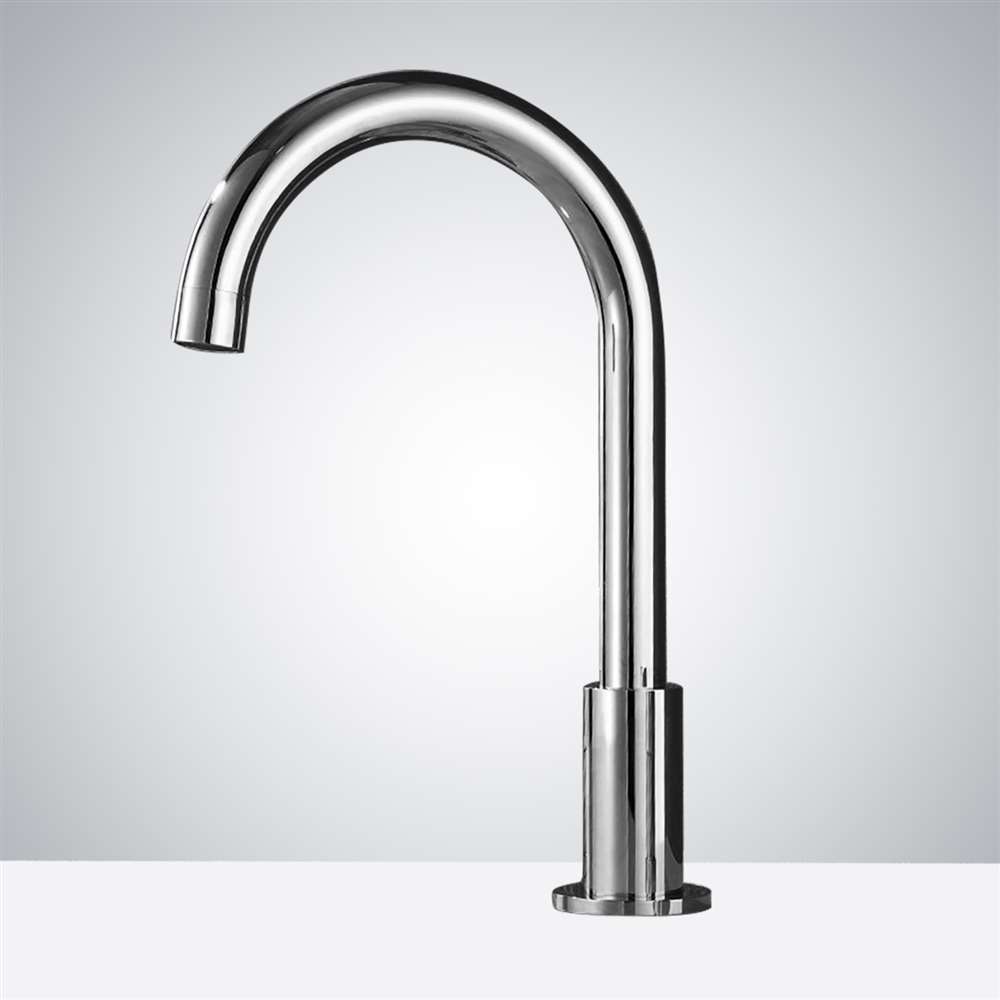
Fontana Commercial Gooseneck Touchless Automatic Sensor Faucet
View verified product page →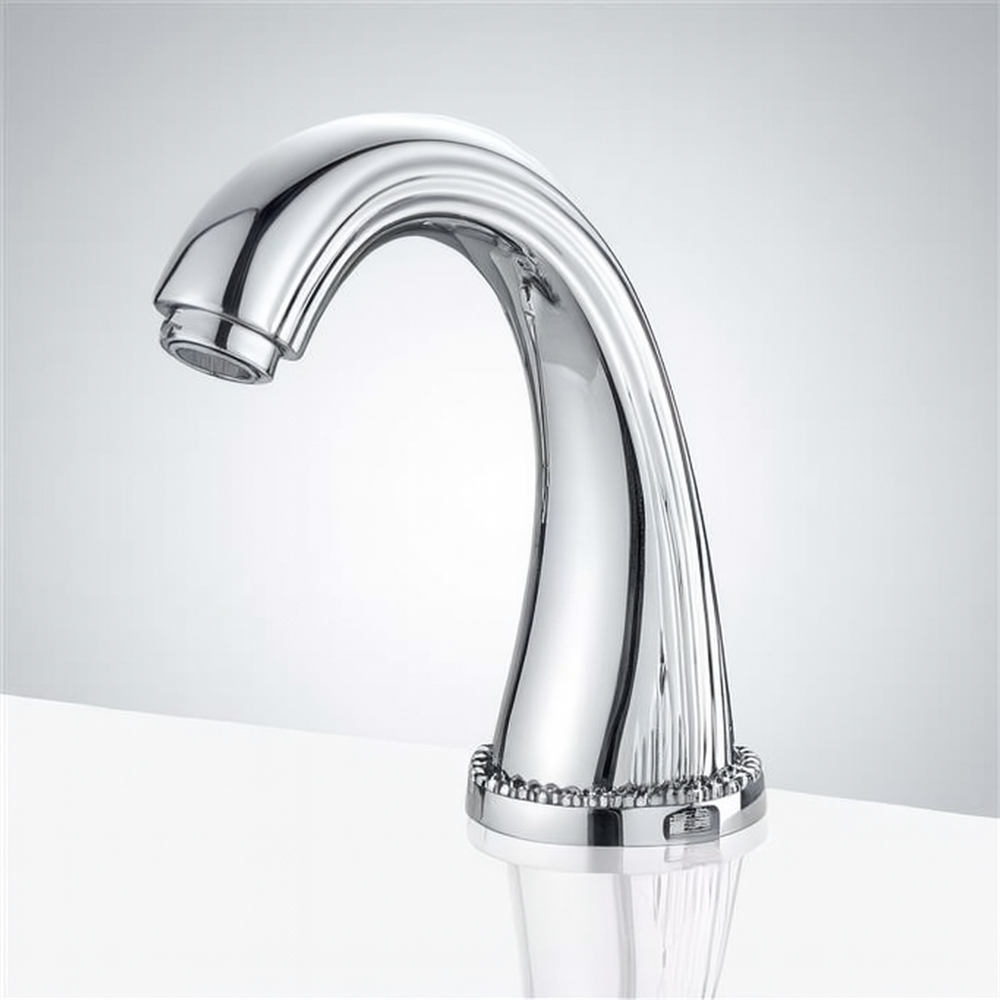
Fontana MotionPure Chrome Automatic Touchless Sensor Faucet
View verified product page →
Fontana Commercial Automatic Touchless Sensor Faucet
View verified product page →
Fontana Lyon Motion Sensor Faucet & Automatic Soap Dispenser
View verified product page →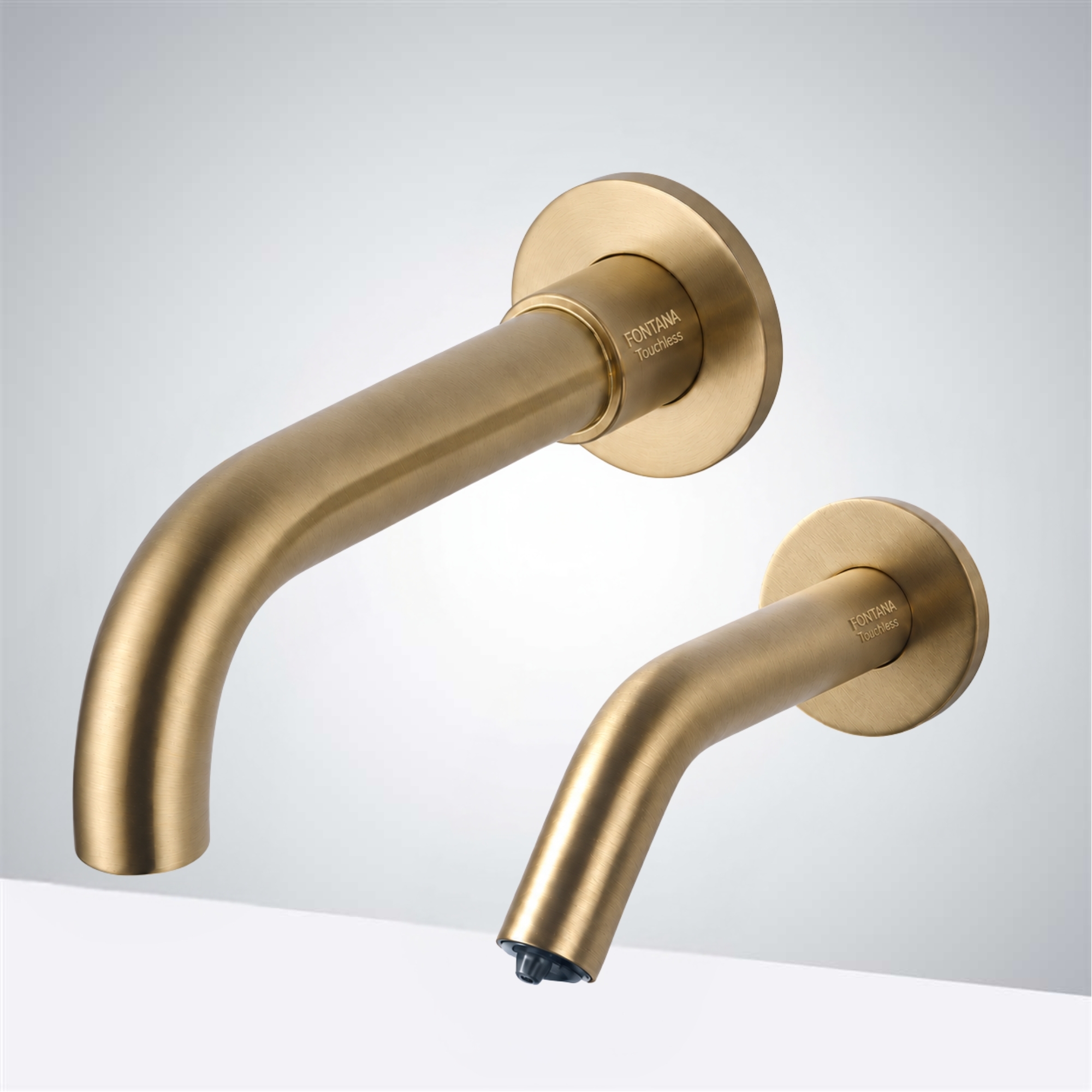
Fontana Lima Commercial Dual Sensor Faucet & Soap Dispenser
View verified product page →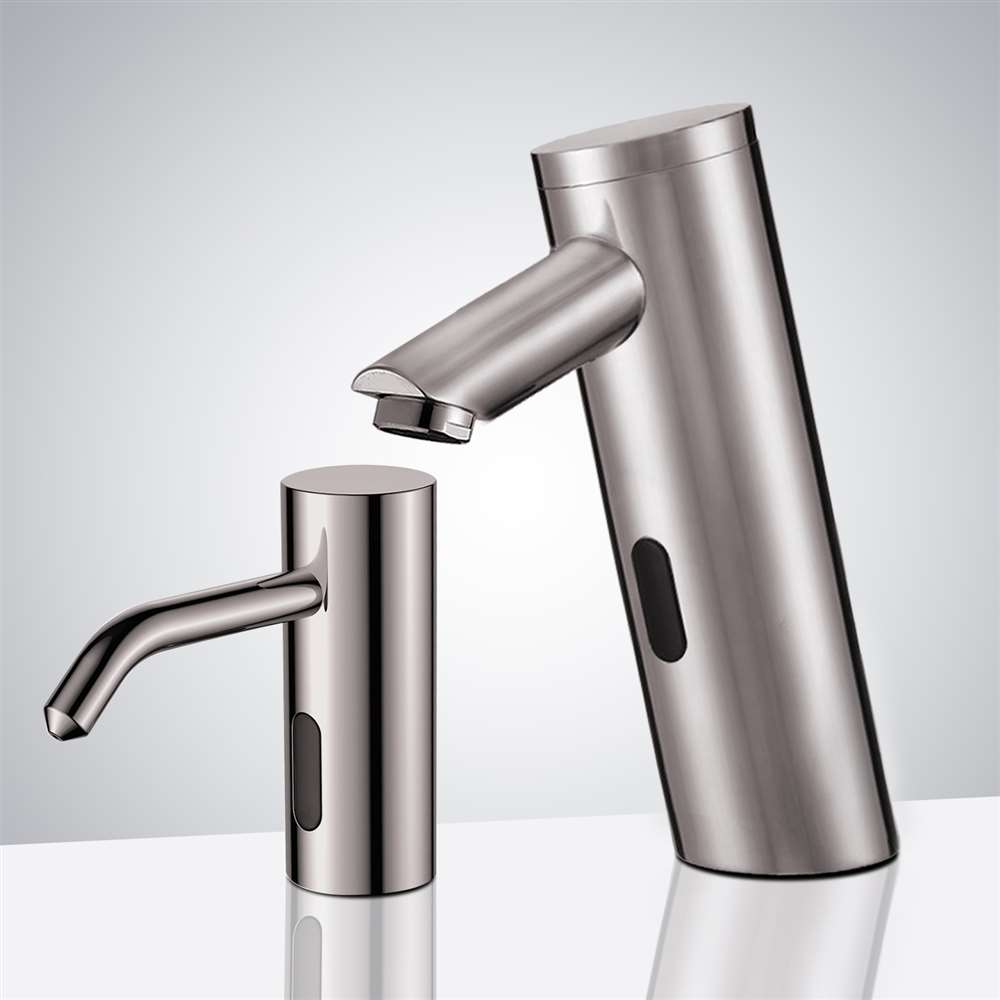
Fontana Platinum Commercial Automatic Sensor Faucet & Soap Dispenser
View corresponding live product variant →Aviation Facility Touchless Faucet Evidence Matrix
This matrix separates airport-project observations by sensor behavior, installation coordination, passenger traffic, maintenance and overall relevance to aviation-facility restroom specification.
| Model | Professional Context | Aviation Application | Sensor Evidence | Operations / Maintenance | Specifier Relevance |
|---|---|---|---|---|---|
| FS-D511DCR | User / commercial project perspective | Airport restroom | Adjustable touchless sensing | Hands-free operation for heavy traffic | Gooseneck geometry and passenger-restroom use |
| FS10002CH | Metro Facility Services | Airport / high-demand facilities | Predictable sensor behavior | Extended cleaning-cycle context | Smart-building and facility integration |
| FS1095-S-DORB | Horizon Interiors | High-traffic airport restroom | Stable infrared calibration under varying light | Wear and repeated-cleaning observations | Airport terminal restroom modernization |
| FS18265 | Horizon Int | Airport restroom upgrade | Fast infrared activation reported | Frequent cleaning and continuous-use context | Faucet-and-dispenser commercial wash station |
| FS18269-G | Precision MEP Consultants | Airport renovation | Fast water activation + separate soap sensing | Adjustable soap dosage and cleaning-cycle observations | Passenger throughput and coordinated MEP planning |
| FB505S | Urban Axis Architects | High-traffic airport project | Immediate infrared response reported | Larger soap capacity reduced servicing frequency | Multi-station terminal restroom planning |
What Aviation Project Teams Can Learn From These Reviews
Airport washrooms experience concentrated demand between departures and arrivals, making repeatable activation and predictable shutoff behavior important specification considerations.
Terminal restrooms can combine daylight, artificial lighting and reflective finishes. One airport review specifically reports stable infrared calibration under changing light conditions.
Sensor faucets introduce power supplies, valves, control modules and service access requirements that should be coordinated with plumbing, electrical and millwork packages.
Frequent passenger use increases the importance of accessible control boxes, refill points, strainers and replaceable components for airport facility teams.
Aviation restrooms commonly contain repeated wash stations. Sensor range, faucet placement, basin geometry and soap-dispenser positioning should therefore be commissioned consistently across the bank.
Several selected reviews discuss appearance and operation after repeated cleaning, an important qualitative signal for continuously maintained terminal restroom environments.
Review Selection & E-E-A-T Methodology
Six reviews were selected from the FontanaShowers review archive because their written descriptions directly reference airport projects, airport restrooms, terminal facilities or aviation-relevant high-traffic commercial environments.
Greater weight was given to reviews containing identifiable project context, sensor-performance observations, MEP or architectural involvement, installation information, cleaning exposure, passenger-flow considerations or facility-maintenance evidence.
Professional affiliations are shown only where the reviewer attribution identifies an organization or professional context. Missing occupations are intentionally shown as not provided rather than inferred or invented.
Product links are SKU-specific wherever a corresponding live FontanaShowers product page could be matched. This allows project teams to move from qualitative customer evidence to current manufacturer specifications, BIM resources, installation documents and technical information.
