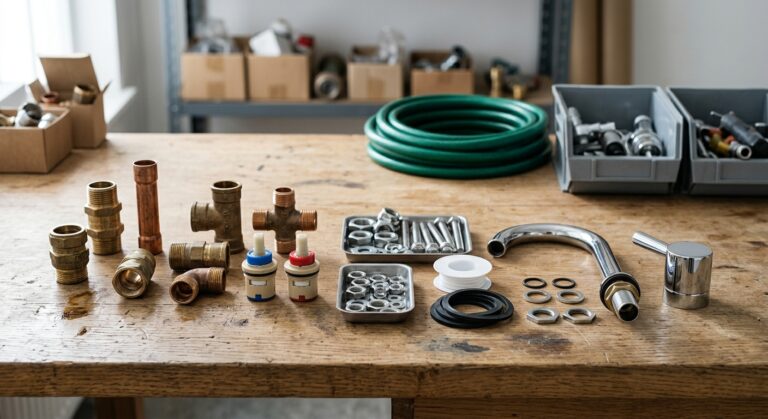
How to Maintain Your Fontanaaviationfaucets — Pro Tips
Proper aviation faucet maintenance helps preserve sensor reliability, consistent water delivery, finish quality, accessibility, and long-term performance in airport terminals, aviation lounges, commercial restrooms, and other demanding environments.
A well-maintained faucet is more than a clean exterior. Reliable operation depends on the condition of its infrared sensor, solenoid valve, water supply, outlet assembly, power source, filters, connections, and installation environment.
This professional maintenance guide explains the practical inspections, cleaning methods, troubleshooting procedures, and preventive service strategies that architects, facility managers, plumbing contractors, and maintenance teams should understand.
Why Aviation Faucet Maintenance Matters
Airport plumbing fixtures often experience prolonged operating hours and frequent daily use. Continuous passenger circulation, periodic peak demand, cleaning operations, and variable hydraulic conditions make preventive maintenance an important part of infrastructure management.
Commercial touchless faucets combine electronics with mechanical water-control components. The detection system must identify the user correctly, while the solenoid valve and hydraulic system must deliver the required water flow. Properly functioning parts should work together without unnecessary delay or leakage.
Read More — Why Preventive Maintenance Is Important
Clean the Faucet Exterior Without Damaging Its Finish
Routine surface cleaning is one of the simplest ways to preserve the appearance and usability of commercial aviation faucets. However, cleaning methods that are harmless to one finish may damage another.
Use a soft, nonabrasive cloth and the cleaning method permitted by the product manufacturer. Avoid abrasive pads, aggressive polishing compounds, and chemicals not approved for the finish or sensor enclosure.
Recommended Practices
- Wipe the faucet body with a soft, clean cloth.
- Use manufacturer-approved mild cleaning solutions.
- Remove residue promptly without abrasive scrubbing.
- Keep cleaning liquid away from electrical openings.
- Dry polished surfaces with a compatible soft cloth.
Practices to Avoid
- Applying abrasive pads or metal brushes.
- Spraying chemicals directly into sensor openings.
- Combining cleaning chemicals.
- Leaving concentrated chemicals on protective finishes.
- Using cleaning agents without reviewing compatibility.
Read More — Finish Protection and Chemical Compatibility
Inspect and Clean the Infrared Sensor
The sensor is a critical part of a touchless faucet. Depending on the design, reflected signals from a user’s hands are interpreted by the controller, which commands the water-control valve to operate.
Soap residue, water spotting, dirt, condensation, and unsuitable cleaning products may interfere with optical detection. Cleaning the sensor window using the manufacturer’s approved procedure can help preserve consistent activation.
Professional Sensor Maintenance Tips
Examine the sensor window for residue or physical damage. After cleaning, test faucet activation using several hand positions within the specified detection range. Verify that water stops appropriately when hands are withdrawn.
Read More — Sensor Diagnostics and Calibration
Inspect Aerators, Flow Regulators and Inlet Filters
Sediment, scale, and debris can accumulate in faucet outlets and upstream filter screens. These deposits may cause uneven discharge, reduced flow, or splashing.
When a faucet develops poor flow, check the permitted maintenance points before assuming that its electronic controls have failed. Use the product’s service instructions to identify removable components.
Recommended Service Procedure
- Observe the discharge pattern and record the symptom.
- Isolate the supply where removal is required.
- Remove serviceable outlet components using approved tools.
- Inspect for visible scale, debris, or damaged seals.
- Clean or replace parts using the manufacturer procedure.
- Reassemble, restore supply, and check for leaks and stable flow.
Learn More — Aerator and Filtration Engineering
Check the Solenoid Valve for Reliable Operation
In many commercial touchless faucets, the solenoid valve controls water delivery in response to the sensor controller. A valve that fails to open or close correctly can cause intermittent operation, no flow, or unwanted continuous discharge.
Before working on internal valve components, authorized technicians should isolate the water supply and electrical power as specified by the manufacturer, depressurize the affected section where appropriate, and follow safe service procedures.
Simplified conceptual diagram; component arrangement varies by model.
Read More — Solenoid Troubleshooting
Maintain Batteries, Power Supplies and Control Connections
Touchless faucet systems may use battery power, permanent low-voltage electrical supplies, or hybrid configurations. Each arrangement requires inspection suited to its design.
Battery-Powered Faucets
Check low-power indicators, battery compartments, connection condition, and replacement accessibility. Use the battery type and polarity specified for the actual model.
Hardwired Faucets
Inspect accessible power equipment for obvious damage, moisture, loose connections, or abnormal conditions. Electrical testing and repair should be performed by qualified personnel.
View More — Electrical Maintenance Planning
Monitor Water Pressure, Flow and Temperature
Reliable faucet operation requires suitable water pressure and stable delivery conditions. When several fixtures operate simultaneously, available dynamic pressure can differ from the pressure observed during idle periods.
Maintenance teams should investigate changes in flow, unusual noise, pressure fluctuations, or recurring water hammer. Such symptoms can originate upstream of the faucet rather than inside the fixture.
| Inspection Parameter | What to Check | Maintenance Response |
|---|---|---|
| Dynamic pressure | Pressure during fixture operation | Compare with rated operating range |
| Outlet flow | Weak or irregular discharge | Inspect outlet, filter and supply conditions |
| Water temperature | Unstable or excessively hot delivery | Review mixing and temperature controls |
| Valve closure | Noise or pressure transients | Investigate piping and valve behavior |
| Supply connections | Visible leaks or damaged components | Isolate and repair using approved parts |
Read More — Hydraulic Engineering
Protect Faucets from Corrosion, Scale and Surface Damage
Faucet body materials and finishes have different maintenance requirements. Commercial brass alloys, stainless-steel components, plated surfaces, and protective coatings should be maintained according to their documented characteristics.
Corrosion
Inspect exposed components for discoloration, pitting, deteriorating coatings, and moisture accumulation around joints.
Mineral Deposits
Monitor outlet components for scale accumulation. Use only manufacturer-approved cleaning methods and descaling products.
Mechanical Wear
Check mountings, connections, seals, and serviceable components for movement, wear, or signs of damage.
Learn More — Material and Water Chemistry
Include Accessibility in Routine Maintenance
Maintenance teams should confirm that the lavatory remains usable by people with disabilities after repairs, fixture replacements, or other modifications. Touchless operation alone does not establish accessibility compliance.
Check that the sensor responds from the intended approach, that obstructions have not been introduced, and that accessible clearances and exposed-piping protections remain intact.
Reference: U.S. Access Board — Lavatories and Sinks
Read More — Accessible Maintenance and Replacement
Recommended Aviation Faucet Maintenance Schedule
A preventive program should be adjusted to the facility’s operating hours, traffic, water quality, equipment condition, and manufacturer instructions. The following schedule is an illustrative planning framework, not a universal product requirement.
| Planning Frequency | Inspection Activity | Purpose |
|---|---|---|
| Daily / routine cleaning | Clean surfaces, observe flow and sensor activation | Identify visible or operational problems |
| Weekly | Check for leakage, abnormal discharge and loose fittings | Detect emerging issues |
| Monthly | Review outlet condition, activation response and service logs | Track reliability and recurring faults |
| Quarterly, where warranted | Inspect accessible filters, power components and connections | Prevent avoidable performance decline |
| Annually or per manufacturer | Conduct system-level condition review and parts planning | Support lifecycle management |
| Whenever symptoms appear | Perform targeted diagnostics and repair | Restore safe and reliable function |
View More — Condition-Based Maintenance
Common Aviation Faucet Problems and Solutions
| Symptom | Possible Cause | Initial Check |
|---|---|---|
| No water activation | Power fault, sensor issue, closed supply, valve fault | Check supply, approved fault indicators and sensor condition |
| Continuous water flow | Detection issue or valve not closing | Isolate fixture if necessary; investigate controller and valve |
| Weak water flow | Blocked outlet, filter or insufficient pressure | Inspect approved service points and dynamic supply pressure |
| Intermittent activation | Sensor interference, poor connection or power problem | Check detection area and electrical condition |
| Water splashing | Outlet distortion, pressure or basin geometry | Inspect outlet and discharge position |
| Visible leakage | Seal or connection damage | Isolate supply and inspect using product instructions |
| Unstable temperature | Mixing or upstream water-system problem | Check approved temperature-control equipment |
Read More — Root-Cause Troubleshooting
Maintenance Priorities Across Commercial Facilities
Aviation faucet maintenance principles are useful throughout public infrastructure. Inspection frequencies and operational priorities should reflect the actual environment.
Airport Terminals
Focus on high-frequency operation, rapid repairs, accessibility and standardized replacement parts.
Airline Lounges
Preserve finish appearance, discreet sensor performance and a consistently comfortable washroom experience.
Hotels and Hospitality
Coordinate cleaning procedures, reliable operation and guest-facing fixture appearance.
Shopping Malls
Prioritize frequent condition checks, filter care, durable finishes and technician access.
Stadiums and Arenas
Plan for peak-demand periods, fixture robustness, water-system stability and quick servicing.
Commercial Offices
Maintain accessible operation, dependable electronics and manageable long-term costs.
Learn More — Facility-Wide Maintenance Strategy
Aviation Faucet Maintenance Checklist
Inspection and Service Essentials
- Check exterior condition and approved cleaning compatibility.
- Clean and test the sensor window.
- Verify activation and automatic shutoff.
- Inspect outlet condition and flow quality.
- Check accessible filtration components when warranted.
- Review battery or power-supply condition.
- Inspect for visible leaks and damaged connections.
- Check operating pressure when symptoms indicate a problem.
- Verify delivered water temperature.
- Keep maintenance access and accessible clearances unobstructed.
- Record diagnosis, repairs and replacement parts.
- Confirm satisfactory operation before returning the faucet to service.
Explore Aviation Faucet Engineering Resources
Learn more about touchless faucet operation, hydraulic system design, electronic controls, and commercial airport infrastructure.
Aviation Faucet Maintenance FAQs
How often should aviation faucets be cleaned?
What causes a touchless aviation faucet to stop working?
Can I clean a sensor faucet with disinfectant?
Why is my aviation faucet producing weak water flow?
How do I know if the solenoid valve is faulty?
Are commercial sensor faucet batteries rechargeable?
Does touchless operation eliminate faucet maintenance?
Can the same maintenance procedures be used onboard aircraft?
Keep Aviation Faucets Reliable for the Long Term
Maintaining commercial aviation faucets requires consistent attention to the complete system. Surface cleaning, sensor inspection, outlet care, solenoid diagnostics, electrical checks, hydraulic performance and accessible service arrangements all contribute to dependable operation.
For airport terminals, airline lounges, hotels, stadiums and other high-traffic facilities, preventive maintenance is most effective when supported by manufacturer instructions, qualified technicians, equipment records and a practical inspection program.
Rather than waiting for a faucet to fail, facilities can use condition-based inspections and maintenance data to reduce avoidable disruption and make more informed replacement decisions.
Support Your Next Aviation Restroom Project
Explore commercial faucet applications, aviation infrastructure research and technical resources for specification and facility planning.
Maintenance and Engineering References
Hydraulic behavior, sensors, materials and commercial infrastructure.
Technical analysis of components, reliability and water-system behavior.
Fixture selection, access and documentation considerations.
Commercial airport faucet applications and product examples.
Guidance on accessibility, operable controls and exposed plumbing.
Water-efficiency information and program resources.
Potable-water standards and product certification information.
Standards relevant to mechanical engineering and plumbing equipment.
Product-specific service procedures, replacement intervals, electrical requirements and certifications must be confirmed using the manufacturer’s documentation. This guide is intended primarily for ground-based airport and commercial restroom installations.