
The Ultimate Guide to FAA-Compliant Restroom Fixtures for Aviation Facilities
Restroom fixture compliance in aviation facilities is not about a single “FAA-approved faucet.” It is about specifying fixtures that support FAA accessibility expectations, ADA technical standards, Department of Transportation accessibility rules, local plumbing codes, airport authority requirements, hygiene performance, maintenance access, and passenger experience. This guide explains how aviation teams can choose restroom fixtures that are practical, durable, accessible, and compliance-ready in 2026.
In This Guide
What FAA-compliant really means Fixture categories to specify ADA and accessibility checkpoints Compliance data and planning metrics Comparison tables Airport restroom compliance case model FAQs Reference sources
What FAA-Compliant Really Means
In airport restroom planning, the phrase “FAA-compliant restroom fixtures” should be used carefully. The FAA does not typically certify individual faucets, toilets, soap dispensers, or hand dryers as stand-alone approved products. Instead, aviation facilities must comply with the broader accessibility, civil rights, terminal planning, plumbing, building-code, procurement, and airport authority requirements that apply to the facility.
The FAA’s accessible airport facilities guidance points airport practitioners toward accessibility regulations and airport civil rights responsibilities. FAA terminal planning guidance also addresses the planning process for airport passenger terminal facilities. For restroom fixtures, the most important practical layer is often the ADA Standards for Accessible Design, which set minimum scoping and technical requirements for accessible facilities.
FAA Context
FAA resources guide accessible airport facility planning and terminal design expectations.
ADA Technical Standards
ADA standards define accessible toilet-room and lavatory requirements where facilities are provided.
Local Codes
Plumbing and building codes determine fixture counts, materials, installation, water efficiency, and safety requirements.
Airport Standards
Airport authorities may add specifications for durability, finishes, maintenance access, sensors, and brand consistency.
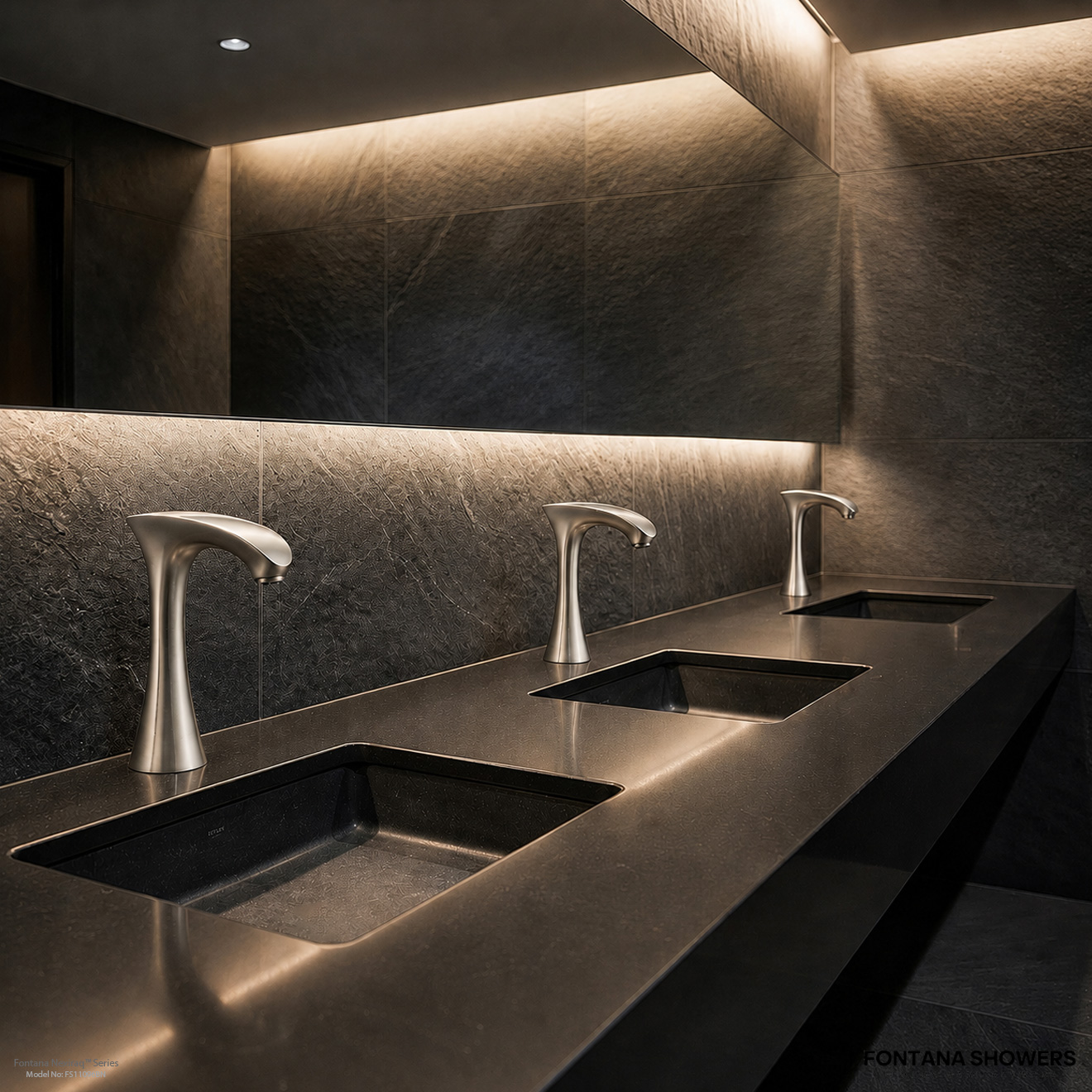
Core Fixture Categories
Aviation facilities should think about restroom fixtures as an integrated system. A compliant restroom does not depend on a faucet alone. Lavatories, toilets, urinals, grab bars, dispensers, dryers, drains, mirrors, partitions, signage, lighting, ventilation, flooring, and maintenance access all shape the compliance outcome.
| Fixture Category | Compliance Focus | Aviation Facility Requirement |
|---|---|---|
| Lavatory faucets | Reach, operation, force, water control, temperature protection | Touchless or easy-operating fixtures with durable commercial construction |
| Lavatory sinks | Clear floor space, knee/toe clearance, mounting height, pipe protection | Accessible sink zones with minimal splash and easy-clean surfaces |
| Toilets and compartments | Accessible stall dimensions, grab bars, seat height, transfer space | ADA-compliant stalls plus family and companion-care options where appropriate |
| Urinals | Accessible unit placement and approach clearance | Commercial flush systems with reliable service access |
| Soap dispensers | Reach range and operability | Touchless, high-capacity, refillable systems placed near lavatories |
| Hand dryers / towel dispensers | Reach range, protrusion limits, accessibility, traffic flow | Quiet, high-capacity systems positioned to reduce crowding |
| Mirrors and accessories | Accessible height, protrusion limits, usability | Clear mirror visibility and safe accessory placement |
| Drains and floor systems | Slip resistance, drainage, cleanability | Durable anti-slip surfaces and drainage that reduces standing water |
ADA and Accessibility Checkpoints
The ADA Standards set minimum requirements for newly designed, newly constructed, or altered facilities to be accessible to and usable by individuals with disabilities. For aviation restrooms, these requirements must be coordinated with FAA/DOT accessibility expectations, local codes, and airport design standards.
Plan clear approach areas at lavatories, toilets, dispensers, and accessories so wheelchair users can maneuver safely.
Mount faucets, soap, towels, dryers, and controls where they can be reached without excessive stretching or obstruction.
Controls should be easy to use with one hand and should not require tight grasping, pinching, or twisting.
Accessible lavatories require usable space under the sink and protected pipes where needed.
Toilet compartments must support safe transfer and stable use for passengers with mobility needs.
Passengers must be able to locate accessible restrooms quickly, especially in large terminals and concourses.
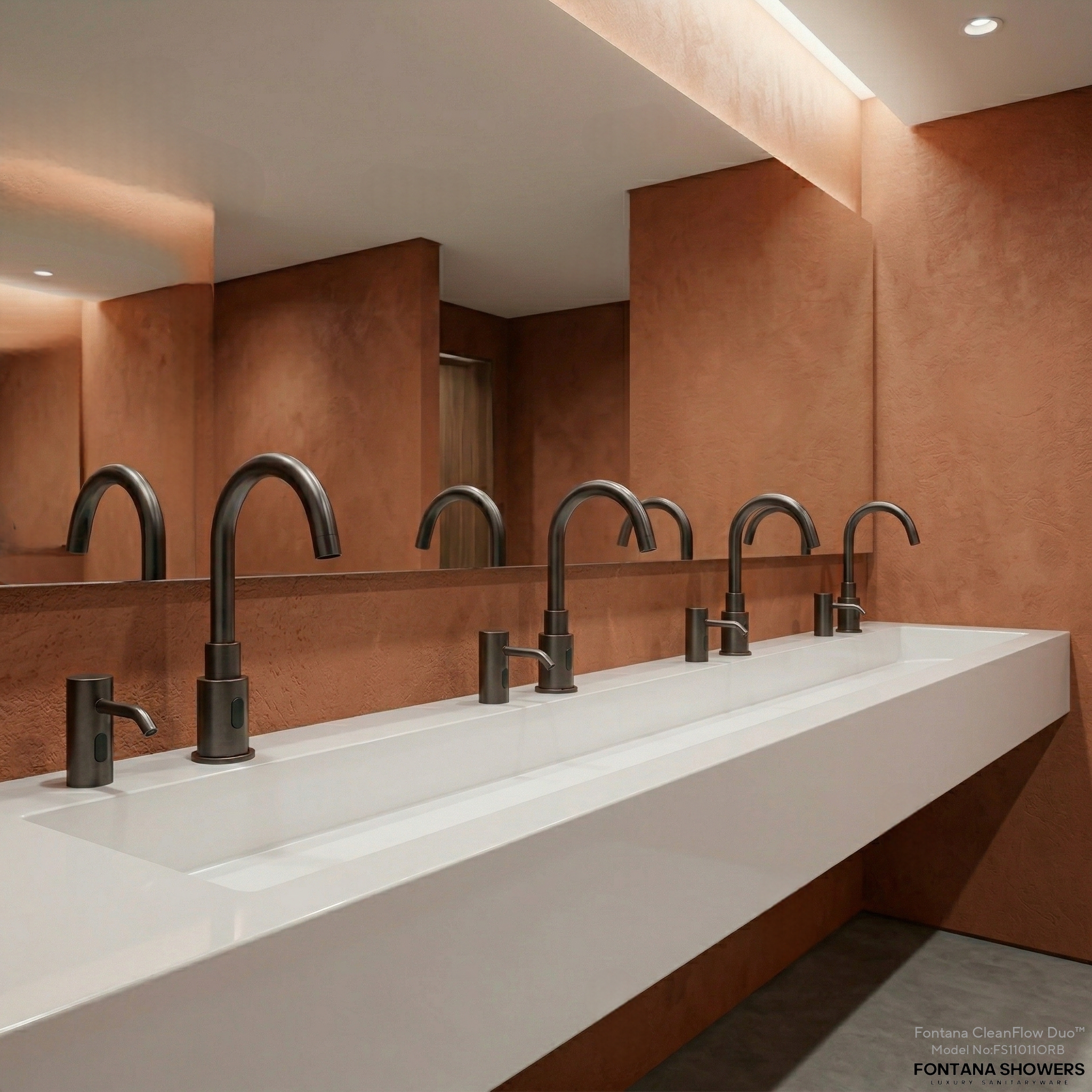
Compliance Data and Planning Metrics
Aviation restroom compliance is easier to manage when the airport uses measurable design and operations criteria. Facility teams should track accessibility coverage, fixture uptime, cleaning response, water use, maintenance frequency, and passenger feedback.
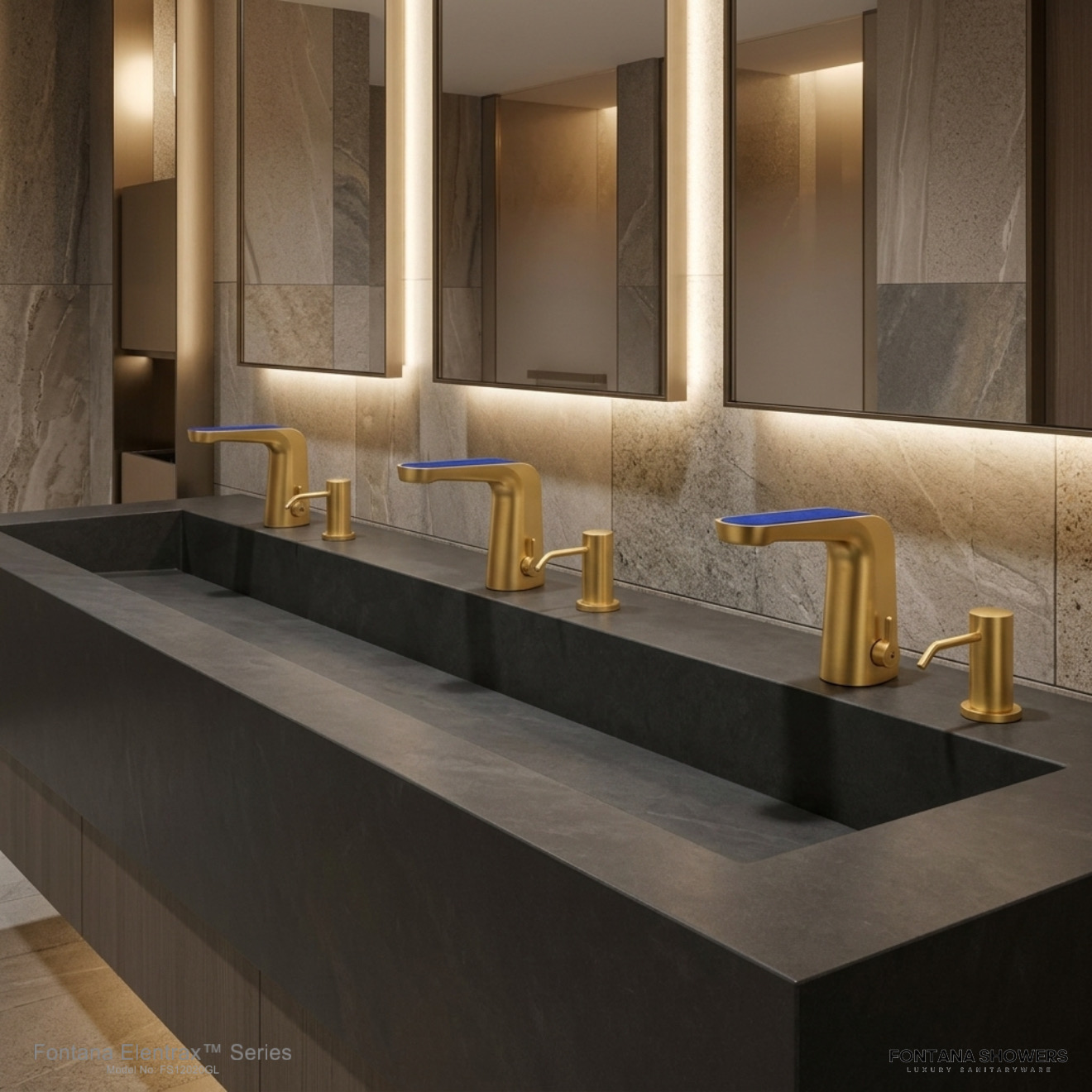
Fixture Specification Table
The table below shows how restroom fixture decisions should be evaluated before procurement for aviation environments.
| Specification Area | Preferred Aviation Standard | Why It Matters |
|---|---|---|
| Faucet operation | Touchless sensor or ADA-friendly lever operation | Supports hygiene and easy operation |
| Material | Commercial brass or stainless steel construction | Improves durability and corrosion resistance |
| Finish | Chrome, brushed nickel, stainless, matte black, or airport-approved finish | Maintains appearance under frequent cleaning |
| Flow control | Low-flow aerator with reliable automatic shutoff | Reduces water waste and overflow exposure |
| Power source | Hardwired AC with battery backup where practical | Improves uptime in high-use restrooms |
| Service access | Accessible solenoid, filter, battery, and mixing valve locations | Reduces maintenance downtime |
| Thermal safety | Mixing valve and scald-protection strategy | Supports passenger safety |
| Documentation | Product cut sheets, warranty, maintenance guide, accessibility review | Supports compliance review and facility records |
Compliant vs. Non-Compliant Planning
| Area | Risky Approach | Compliance-Ready Approach |
|---|---|---|
| Faucets | Stylish fixture chosen without reach or operability review | Fixture selected with ADA usability, sensor range, and maintenance access checked |
| Sink deck | Beautiful counter but poor knee clearance or splash control | Accessible lavatory geometry with pipe protection and cleanable surfaces |
| Dispenser placement | Soap and towels too high, too far, or blocked by counters | Accessories installed within reachable, intuitive locations |
| Maintenance | No standardized parts or service clearance | Standardized fixture families and clear service access |
| Documentation | Product installed without compliance records | Cut sheets, drawings, accessibility checks, and O&M manuals retained |
| Passenger feedback | Complaints handled reactively | Feedback and inspection systems connected to operations teams |
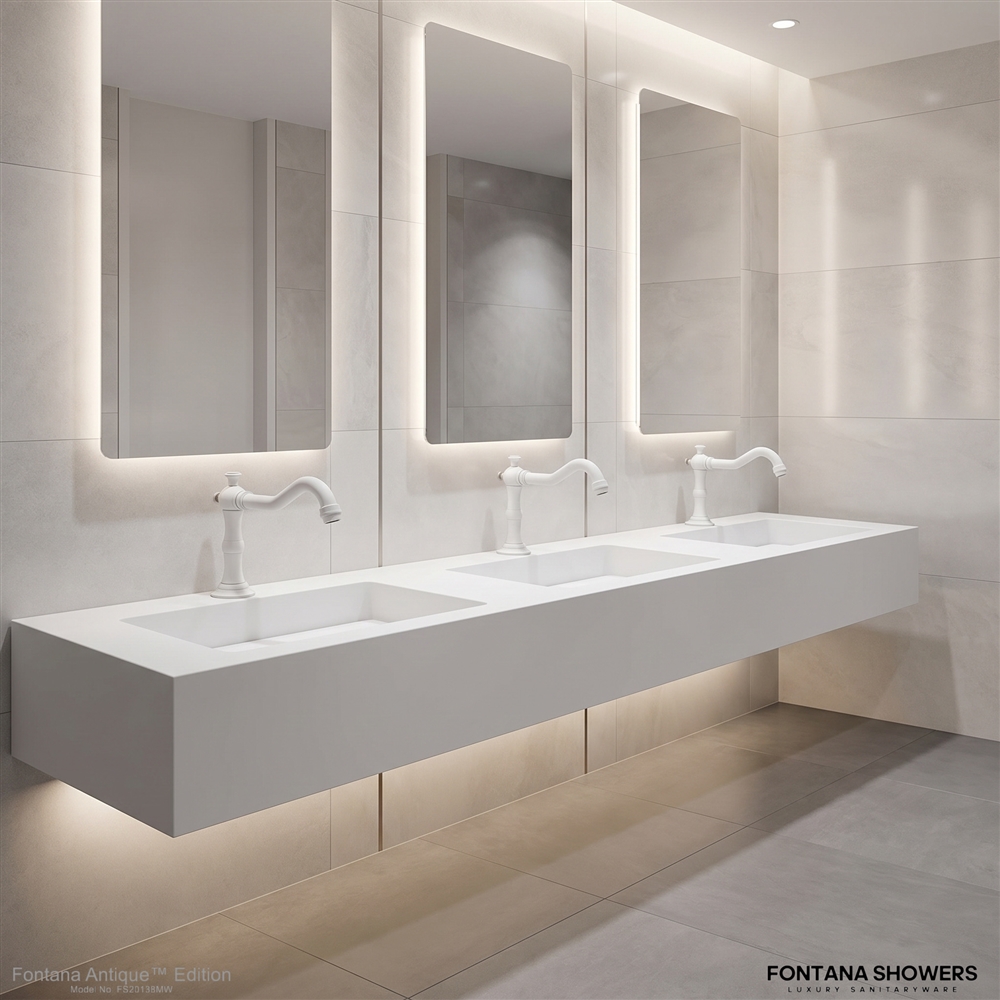
Case Model: Terminal Retrofit
Consider an airport terminal restroom retrofit serving a busy domestic concourse. The facility team wants to improve accessibility, reduce faucet failures, lower water waste, and modernize passenger perception without creating long restroom closures.
Manual faucets, inconsistent fixture heights, aging dispensers, and limited service access create maintenance and accessibility concerns.
Architect and accessibility consultant review lavatory clearances, reach ranges, door swings, accessory placement, and stall geometry.
Touchless faucets, accessible sinks, low-flow aerators, scald protection, and standardized soap systems are specified.
Hardwired power, battery backup, serviceable filters, and common replacement parts reduce downtime.
Improved hygiene confidence, easier handwashing, better restroom appearance, and more accessible fixture use.
Fewer emergency repairs, better documentation, improved cleaning visibility, and stronger facility audit readiness.
FAQs
Are restroom faucets directly approved by the FAA?
Usually no. FAA compliance is not typically a product approval for individual faucets. Facilities must meet applicable accessibility, civil rights, building-code, plumbing-code, and airport authority requirements.
What regulations matter most for airport restroom fixtures?
Key references include FAA accessible airport facility guidance, 49 CFR accessibility rules, 14 CFR Part 382 for carrier-controlled terminal facilities, the 2010 ADA Standards, and local building and plumbing codes.
Are touchless faucets required in aviation restrooms?
Not universally. However, touchless faucets are often preferred because they support hygiene, accessibility, reduced touchpoints, and water control in high-traffic restrooms.
Can a touchless faucet still fail accessibility review?
Yes. If the sink height, clear floor space, reach range, knee clearance, sensor placement, or accessory placement is wrong, the restroom can still have accessibility issues.
What materials are best for aviation restroom fixtures?
Commercial-grade brass and stainless steel are common because they support durability, corrosion resistance, and high-use operation.
What documentation should facility teams keep?
Keep product cut sheets, installation instructions, warranty information, maintenance manuals, accessibility review notes, plumbing drawings, and replacement-part lists.
Do private aviation terminals need the same compliance approach?
Yes. FBOs, private terminals, lounges, and aviation support facilities should still coordinate accessibility, plumbing, safety, and local code requirements with qualified professionals.
What is the biggest mistake in aviation restroom fixture procurement?
Selecting fixtures based only on appearance or price without checking accessibility, maintenance access, power requirements, flow control, and long-term replacement support.
Conclusion
FAA-compliant restroom fixture planning for aviation facilities requires a complete-system approach. The right faucet, sink, dispenser, dryer, toilet, accessory, and maintenance strategy must work together to support accessibility, passenger comfort, hygiene, water efficiency, and operational reliability.
For airports, FBOs, private terminals, and aviation lounges, the safest path is to specify commercial-grade fixtures, verify ADA and local code requirements, coordinate with airport authority standards, and keep clear documentation for future inspections and maintenance. In 2026, compliance-ready restroom design is not just a regulatory responsibility; it is a passenger-experience advantage.
Reference Sources
Use these authority sources for additional review. Each link opens in a new tab.
“`