
How Smart Faucets Are Transforming Modern Airport Infrastructure in 2026
Airports in 2026 are evolving into intelligent transportation ecosystems powered by automation, connected systems, predictive maintenance, and data-driven passenger services. One of the most overlooked upgrades driving this transformation is the rise of smart aviation faucets. These advanced fixtures help airports improve hygiene compliance, conserve water, reduce maintenance calls, and modernize restroom infrastructure for millions of passengers every year.

Why Airports Are Investing in Smart Infrastructure
Modern airports are no longer judged only by runway efficiency or gate capacity. Passenger expectations now extend to restroom cleanliness, sustainability, hygiene visibility, accessibility, and operational reliability. As airport traffic continues to rise, operators are investing in systems that reduce friction and automate repetitive facility operations.
Smart faucets support these goals by becoming part of a connected restroom ecosystem. Instead of functioning as simple plumbing fixtures, they now provide automated activation, water optimization, usage monitoring, and maintenance visibility.
Touchless Automation
Sensor-based activation reduces passenger contact with shared surfaces while improving restroom flow during peak traffic waves.
Water Intelligence
Smart flow controls optimize water usage and prevent unnecessary run time in high-volume terminal restrooms.
Predictive Maintenance
Connected systems help maintenance teams identify leaks, sensor faults, and abnormal fixture behavior before failures escalate.
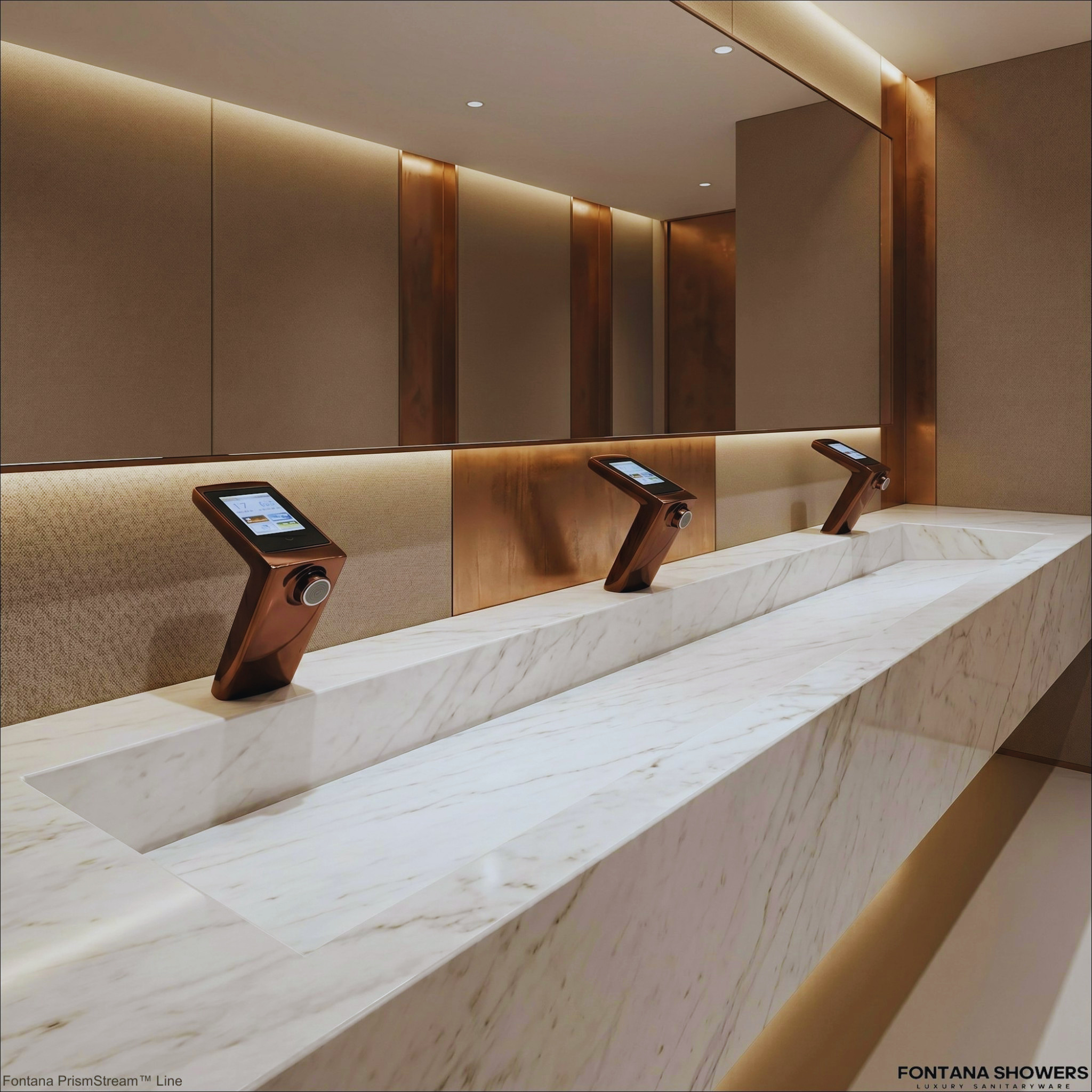
How Smart Faucets Improve Airport Operations
Airport facilities teams manage thousands of restroom visits daily. Manual fixtures can lead to inconsistent water shutoff, excess maintenance calls, splash accumulation, and avoidable water waste. Smart faucets solve these issues through intelligent automation and consistent performance.
Many airport restroom systems now integrate touchless faucets with occupancy monitoring, automated soap dispensers, cleaning alerts, and maintenance dashboards. This creates a more predictable environment for facility managers and a more polished experience for passengers.
| Smart Faucet Feature | Airport Benefit | Operational Impact |
|---|---|---|
| Infrared Sensor Activation | Hands-free passenger experience | Reduces shared contact points |
| Automatic Shutoff | Water conservation | Controls unnecessary water flow and overflow risk |
| Adjustable Time-outs | Controls run time by application | Helps standardize water use across restroom banks |
| AC/DC Power Options | Reliable operation during long airport hours | Supports uptime and easier maintenance planning |
| Sealed Electronics | Protection in wet, high-use environments | Improves fixture durability and service life |
| Usage Monitoring | Fixture analytics | Supports preventive maintenance and cleaning allocation |
| Leak Detection | Faster issue identification | Prevents costly plumbing failures and restroom closures |

Water Efficiency and Sustainability Goals
Sustainability remains a major priority for airports in 2026. Large terminals consume significant amounts of water every day, especially across restroom facilities. Smart faucets help reduce waste by controlling activation timing, regulating flow, and minimizing accidental continuous use.
For airports pursuing sustainability certifications and ESG initiatives, smart water management systems contribute measurable operational improvements. Intelligent faucet systems can also support broader terminal resource reporting strategies.

Smart Restrooms and Passenger Experience
Passenger perception plays a major role in airport satisfaction scores. Cleanliness and restroom quality influence how travelers evaluate terminals. Smart faucets help reinforce a modern, high-tech, and hygienic environment while reducing visible operational issues such as dripping taps, wet countertops, and poorly functioning fixtures.
Travelers in 2026 increasingly expect airports to provide automated and touchless environments. Smart restroom technology aligns with broader passenger expectations already seen in biometric boarding, digital wayfinding, self-service check-in, and contactless payments.

Operational Data and Performance Trends
As airports become more data-driven, restroom systems are increasingly evaluated using operational KPIs. Smart faucets contribute measurable data points that help airport operators understand usage behavior, maintenance frequency, and sustainability performance across terminals.
| Airport Restroom Metric | Traditional Fixture Environment | Smart Faucet Environment |
|---|---|---|
| Average Water Control Efficiency | Variable manual shutoff | Automated and standardized flow timing |
| Passenger Contact Points | High | Significantly reduced |
| Maintenance Visibility | Reactive maintenance | Preventive monitoring capability |
| Water Waste Exposure | Higher risk from continuous flow | Reduced through timed shutoff |
| Passenger Hygiene Confidence | Dependent on manual fixture condition | Enhanced through touchless interaction |
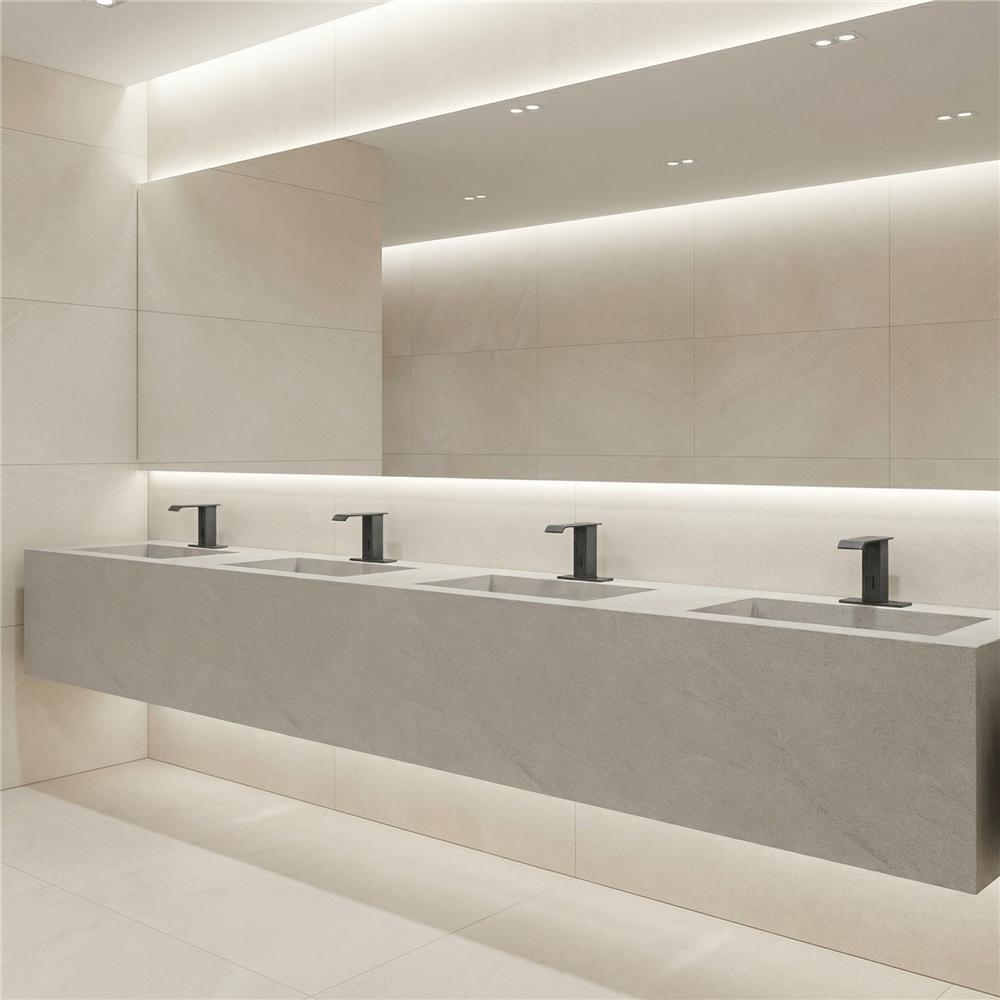
Future-Proofing Airport Infrastructure
As airports continue to expand and modernize, infrastructure decisions must support long-term operational flexibility. Smart faucets provide scalable technology that can integrate with future restroom analytics platforms, building automation systems, and AI-driven maintenance programs.
Instead of treating faucets as isolated fixtures, airports are increasingly incorporating them into connected infrastructure planning strategies. This shift helps create terminals that are more resilient, efficient, sustainable, and passenger-focused.
Why Smart Faucet Systems Matter for International Airports
International airports face unique infrastructure challenges because of constant passenger turnover, long operating hours, diverse traveler expectations, and heavy restroom demand. Smart faucet systems help standardize restroom performance across multiple terminals and reduce the operational inconsistencies that often appear in large-scale public facilities.
For airport authorities, restroom modernization is now part of broader infrastructure resilience planning. Smart systems help reduce unnecessary service calls, support sustainability initiatives, and improve long-term operational consistency while contributing to the airport’s public image.
FAQs
What makes a faucet “smart” in an airport restroom?
A smart faucet uses sensors, automatic shutoff, controlled flow, sealed electronics, power-management options, and sometimes monitoring capability to support hygiene, water efficiency, and maintenance visibility.
Are smart faucets better than standard touchless faucets?
Touchless operation is the foundation. Smart faucets go further by offering adjustable time-outs, stronger electronics protection, dual power options, diagnostics, usage data, or compatibility with connected restroom systems.
How do smart faucets reduce airport water waste?
They limit run time with automatic shutoff, use controlled flow rates, and reduce accidental continuous water use. In large terminals, these small savings can multiply across hundreds of fixtures.
What specifications should airport designers request?
Look for commercial-grade brass construction, ADA compliance, vandal-resistant design, low-flow aerators, adjustable sensor range, AC/DC power, sealed electronics, serviceable filters, and strong warranty support.
Can smart faucets support hygiene compliance?
Yes. They reduce shared touchpoints, simplify handwashing behavior, and help create a more consistent restroom experience. They should still be paired with reliable soap, drying, cleaning, and inspection programs.
Are smart faucets suitable for high-traffic airport terminals?
Yes, when specified as commercial-grade fixtures designed for heavy use, corrosion resistance, service access, and long operating cycles.
Do airports need connected dashboards for every faucet?
Not always. Some projects only need reliable touchless fixtures. Larger terminals may benefit from connected dashboards when they manage many restroom banks and need centralized maintenance visibility.
What is the main ROI driver?
The strongest ROI usually comes from reduced water waste, fewer maintenance issues, lower restroom downtime, improved passenger satisfaction, and better long-term fixture durability.
Takeaways
Smart faucets are transforming modern airport infrastructure in 2026 by combining automation, hygiene support, sustainability, and operational intelligence into a single fixture category. For airports handling millions of passengers every year, these systems offer measurable advantages in water management, passenger experience, maintenance efficiency, and facility modernization.
As airport infrastructure becomes more connected and data-driven, smart aviation faucets will continue playing a larger role in how terminals improve restroom performance and support the evolving expectations of global travelers.
Authority References
“`