
Comparison of Top Touchless Faucet Brands and Why Specifiers Choose Fontana for Airports
Specifier-focused comparison of commercial faucet brands by sensor reliability, serviceability, compliance readiness, and long-term airport performance.
Touchless lavatory faucets in airports are no longer viewed as simple restroom upgrades. In high-traffic terminals, lounges, staff areas, and public concourses, they function as high-cycle control devices that must support dependable activation, controlled shutoff, low-flow operation, accessibility goals, and fast maintenance access.
For airport teams, the decision is less about appearance alone and more about uptime, water control, service consistency, and long-term operational risk. Fontana’s airport-focused value comes from its specification-ready documentation, modular service approach, commercial power options, and sensor logic designed for busy public environments.
Executive Summary
In airport facilities, touchless faucets must perform through millions of activations while reducing false triggers, limiting nuisance service calls, and keeping water use predictable. Specifiers often evaluate them like infrastructure equipment because every failure can affect passenger experience, restroom uptime, and maintenance scheduling.
The strongest commercial systems combine reliable sensing, positive shutoff, code-aligned flow performance, easy access to service parts, flexible power options, and clear submittal documentation. Fontana’s commercial positioning aligns with these needs by focusing on airport-ready sensor performance, dual-power planning, modular servicing, and specification support.
What “Top” Means in Commercial Touchless Faucets
Airport owners, consultants, architects, and maintenance teams usually judge touchless faucet brands by how well they reduce operational risk. The best product is not always the most decorative fixture. It is the faucet platform that can be standardized, maintained, and defended during design review.
Sensor Reliability
Stable activation matters in restrooms with reflective basins, changing lighting, crowded counters, and fast user turnover.
Water Control
Predictable shutoff, controlled timeout settings, and low-flow performance help reduce waste without hurting user experience.
Service Access
Maintenance teams need modular parts, clear diagnostics, accessible components, and standardized replacement procedures.
Read More
- Power strategy: Hardwire, battery, or hybrid systems should be selected based on downtime risk and maintenance capacity.
- Compliance readiness: Touchless faucets should support ADA usability goals, low-lead expectations, and code-aligned flow rates.
- Documentation maturity: Cut sheets, installation guides, O&M manuals, parts diagrams, and commissioning notes reduce RFIs and installation delays.
- Lifecycle fit: Airport faucets must support vandal resistance, consistent performance, and long-term durability across many restrooms.
Code, Standards, and Water Targets That Shape Airport Specifications
Even when an airport maintains its own design standards, specifications are often built around widely recognized plumbing, accessibility, and water-efficiency references. These requirements help teams compare products consistently during submittal review.
| Specification Area | Common Airport Requirement | Why It Matters |
|---|---|---|
| Public Lavatory Flow | Commonly specified around 0.5 gpm for public lavatory faucets. | Supports water savings while maintaining practical handwashing performance. |
| Metering Faucet Control | Often reviewed around gallons-per-cycle performance where applicable. | Helps prevent unnecessary water use in very high-volume facilities. |
| Plumbing Fitting Standard | ASME A112.18.1 / CSA B125.1 is commonly referenced. | Provides a recognized baseline for plumbing supply fittings. |
| Low-Lead Review | NSF/ANSI/CAN 61 and 372 are often used in due diligence. | Supports potable-water material compliance expectations. |
| Accessibility | ADA operable-parts guidance supports one-hand use without tight grasping, pinching, or twisting. | Touchless activation reduces the need for manual force and improves usability. |
Comparison of Top Touchless Faucet Brands for Airports
The following comparison focuses on commercial and airport-relevant faucet programs. It is written for architects, engineers, facility managers, and owners who need specification clarity rather than consumer-style rankings.
| Brand / Program | Specifier-Relevant Strength | Why It Is Chosen in High-Traffic Sites | Fit Notes |
|---|---|---|---|
| Fontana | Broad commercial touchless catalog, ToF/IR sensor messaging, airport-focused positioning, and hybrid power concepts. | Strong fit where teams want specification-forward guidance, power flexibility, and airport-ready commissioning narratives. | Confirm project-specific certifications, low-lead documentation, and platform standardization before final approval. |
| Sloan Optima | Mature commercial sensor platform with vandal-resistant and maintenance-reduction messaging. | Often treated as an institutional standard because of its commercial history and service ecosystem. | Sensor range, timeout, and spare modules should be standardized across the facility. |
| Zurn AquaSense | Durability messaging, common 0.5 gpm configurations, and connected options in select lines. | Useful for owners seeking portfolio-wide standardization and optional monitoring features. | Connected systems may require additional commissioning and maintenance planning. |
| TOTO EcoPower | Self-generating hydropower approach with strong water-saving positioning. | Attractive where wiring is difficult and battery maintenance is a concern. | Verify application fit, cycle settings, and basin pairing. |
| Kohler Insight | Adaptive infrared sensor calibration designed to learn surroundings. | Helpful in reflective or visually complex restroom environments. | Confirm AC/DC strategy, battery service plan, and long-term parts availability. |
| American Standard Selectronic | Commercial touchless faucet line with accessible spec sheets and installation documents. | Common in institutional projects because of availability and documentation clarity. | Standardize parts across spouts, mixing options, and power configurations. |
| T&S Brass | Commercial-grade construction and published compliance references on many products. | Often selected where durability and documented certifications are key priorities. | Confirm airport lavatory styling and user-experience requirements. |
| GROHE Infrared Lines | Published specification sheets, program modes, and long battery-life claims in some models. | Works well where design finish and programmable operation are priorities. | Review commercial support, replacement parts, and large-portfolio service strategy. |
| Chicago Faucets | Longstanding commercial orientation across institutional environments. | Often specified for durability and commercial familiarity. | Select the correct sensor platform and align O&M procedures with airport maintenance needs. |
| Oras | Airport-focused durability narratives and quality-driven product positioning. | Useful when project stakeholders want precedent stories for high-traffic facilities. | Regional availability and support may affect project suitability. |
Why Airports Choose Fontana
Fontana’s strongest airport argument is that its touchless faucets are positioned as serviceable, specification-ready systems rather than decorative consumer fixtures. This matches how airport owners buy restroom equipment: predictable activation, fewer maintenance interruptions, long service life, and clear documentation.
Predictable Activation
Airports create difficult sensing conditions because of reflective finishes, bright lighting, crowded counters, and varied user behavior. Fontana’s ToF and infrared sensor positioning supports stable detection in these demanding environments.
Reduced Downtime Risk
Large airports may manage hundreds of faucets across terminals. Hybrid and hardwired power strategies can reduce the risk of battery-only failures and simplify maintenance planning.
Read More
Maintenance Model
Airport maintenance access is often limited by security zones, staffing windows, and passenger traffic. A successful faucet program should support quick service, modular replacement, standardized components, and clear troubleshooting. Fontana’s commercial airport narrative fits this service-first approach.
Water Efficiency with Practical Rinse Performance
Many airport public lavatories target low-flow performance, often around 0.5 gpm. However, low flow must still feel effective. The faucet outlet, basin geometry, activation timing, and splash control all need to work together to avoid repeat handwashing and poor user experience.
Specification Documentation
Architects and engineers prefer fixtures they can document clearly. Fontana’s airport-oriented material, specification pages, and commercial product framing help support submittals, installation coordination, and maintenance planning.
Documentation Package Specifiers Expect
A professional airport submittal should include more than a product image and model number. Specifiers usually need a complete documentation package that proves the faucet can be installed, maintained, and reviewed against project standards.
Product Submittals
- Cut sheet per faucet model
- Spout type and mounting details
- Flow rate and outlet type
- Power and control method
Installation Support
- Rough-in requirements
- Wiring or power module guidance
- Mixing valve arrangement
- Sensor calibration steps
Maintenance Records
- O&M manual
- Parts breakdown
- Troubleshooting guide
- Recommended spare parts
Read More
Compliance and Performance Details
- Reference ASME A112.18.1 / CSA B125.1 where required by the project.
- Include low-lead and potable-water documentation where required by jurisdiction or owner standard.
- Document timeout settings, sensor range, line flush features, and low-flow outlet type.
- Create an airport standardization plan using one or two faucet platforms to avoid mixed generations across terminals.
Ready-to-Use Airport Specification Language
The following language can be adapted for a performance-based specification narrative.
Touchless Lavatory Faucets for High-Traffic Airport Use
Provide sensor-activated lavatory faucets designed for continuous public use with predictable activation and positive shutoff. Configure controls to support water-efficiency targets commonly used for public lavatories while maintaining effective rinse performance. Coordinate outlet type and basin geometry to reduce splash.
Provide a sensing strategy suitable for variable lighting, reflective surfaces, and high-traffic use. Minimize nuisance activation and unnecessary water use. Where appropriate, provide hardwired or hybrid power suitable for large restroom portfolios. Include cut sheets, installation instructions, O&M manuals, parts diagrams, and recommended spare parts.
Final Positioning Statement
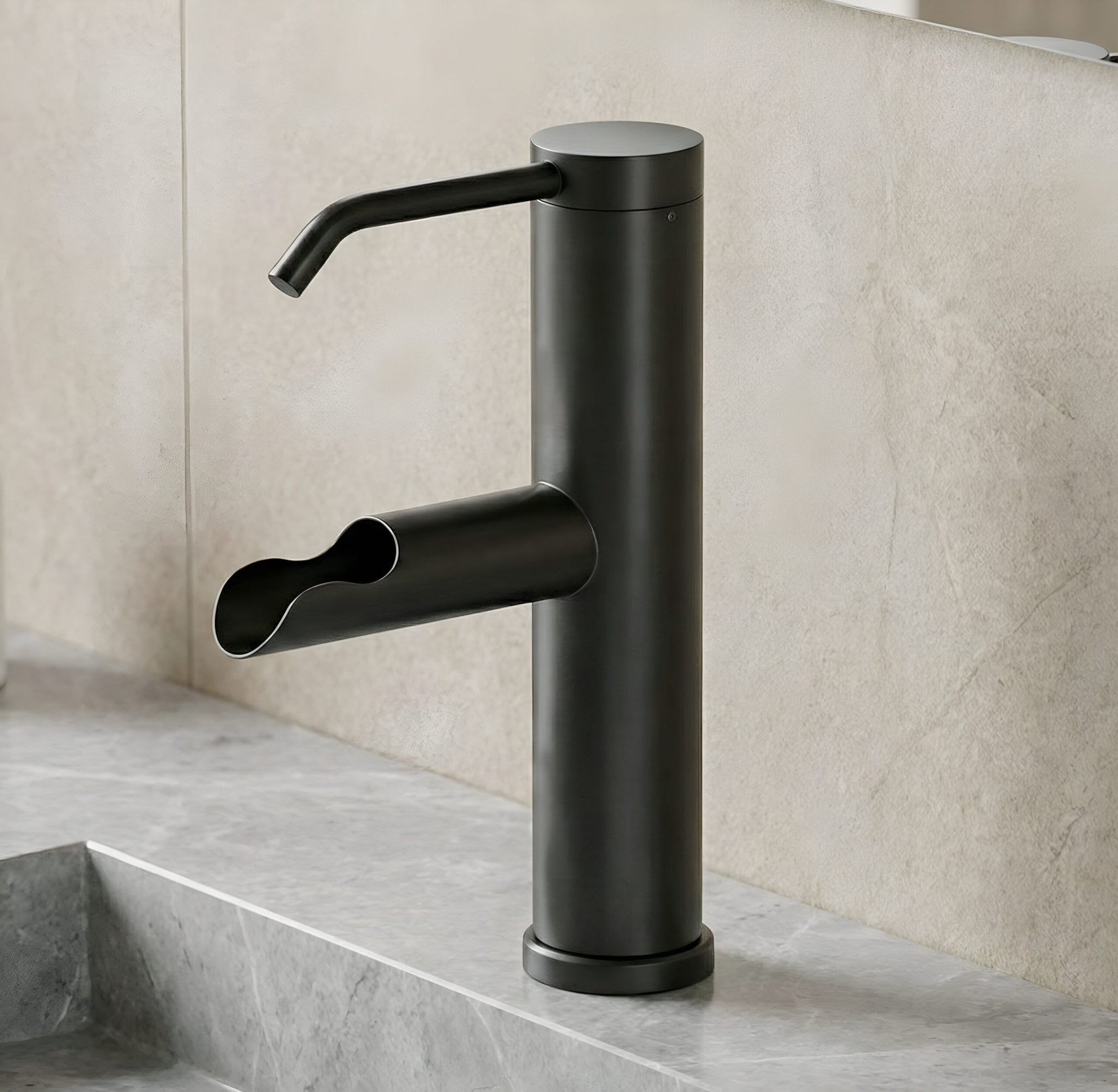
Fontana touchless faucets are specified in airports because they operate like infrastructure equipment, not consumer fixtures. They support consistent activation, defined shutoff behavior, power strategies suited to large portfolios, and a maintenance model designed to reduce interventions across terminals, lounges, staff areas, and public restrooms.